
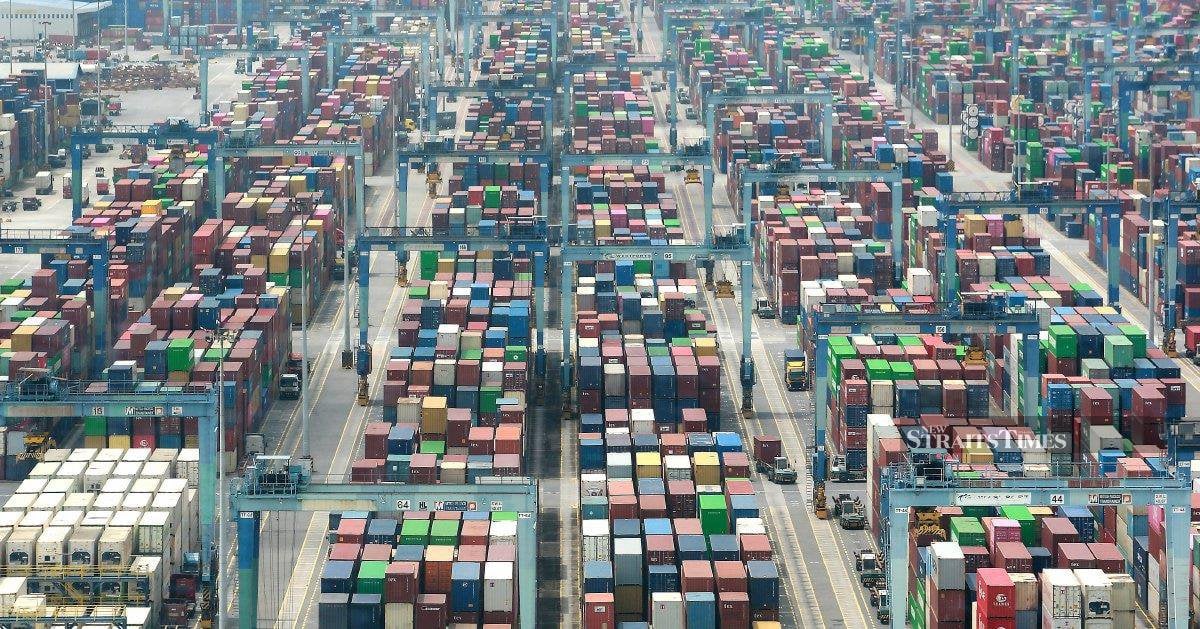
A Surplus That No Longer Self-Corrects
Orthodox economics rests on a familiar expectation: persistent trade imbalances should, over time, correct themselves.
A country that exports substantially more than it imports would normally experience currency appreciation, rising imports, and a gradual narrowing of its surplus.
China‘s experience has increasingly diverged from this pattern. Despite its industrial scale and export strength, import growth has remained subdued even as exports have surged.
The result is a trade surplus that has not only persisted, but reached unprecedented levels in recent years.
For many of China‘s trading partners—particularly in Europe—this raises a quiet but consequential question.
If the usual adjustment mechanisms no longer operate as expected, where, and how, does balance eventually emerge?
From Complementarity to Competitive Tension
The present unease differs from earlier phases of China‘s integration into the global economy. In the past, trade relationships were largely complementary.
China supplied labour-intensive goods and intermediate components, while advanced economies exported capital goods, technology, and high-value manufactures.
That pattern has evolved. China today operates across the full industrial spectrum, from basic inputs to advanced products such as electric vehicles, batteries, and industrial machinery.
As a result, even trading partners inclined to expand exports to China encounter structural limits. The issue is not a lack of demand, but a narrowing space for differentiation.
When production capabilities converge so extensively, trade becomes less mutually reinforcing and more politically sensitive.
Policy Choices and Structural Priorities
China’s expanding surplus is best understood not as a cyclical outcome of global demand, but as the cumulative result of strategic priorities.
Industrial upgrading under initiatives such as Made in China 2025, careful management of the renminbi, and a measured approach to boosting household consumption have together shaped an economy that remains strongly export-oriented.
From Beijing’s perspective, these policies support employment, technological capability, and social stability. From the perspective of its partners, however, they generate adjustment pressures that are increasingly difficult to absorb.
The tension lies not in rule-breaking, but in the coexistence of different economic philosophies within a shared trading system.
The US and the Return of Trade as Strategy
The US has confronted these dynamics earlier and more bluntly than most. Long before Europe’s recent turn toward trade defence and industrial policy, Washington had concluded that persistent imbalances with China were not selfcorrecting.
Under President Donald Trump, this diagnosis translated into an explicit rejection of orthodox adjustment assumptions. Tariffs were framed not as temporary bargaining tools, but as instruments to force structural change—on market access, industrial subsidies, and supply-chain dependence.
While controversial in method, the underlying concern was widely shared: that an economy capable of exporting at scale without corresponding import absorption posed not merely a commercial challenge, but a strategic one.
What is sometimes overlooked is how limited the change in this assessment was after President Trump left office. Following the end of his first term in January 2021, United States trade policy toward China continued largely along the same substantive lines, even as tone and presentation became more measured.
Subsequent administrations maintained most trade measures, broadened technology-related controls, and complemented trade defence with expanded domestic industrial policy.
The shift, therefore, was more one of approach than of underlying judgement. In this sense, Trump did not so much initiate a rupture as he brought forward and made more explicit a reassessment that was already taking shape.
The US’ experience points to a wider conclusion now being reached across several advanced economies: that where trade imbalances are closely linked to state-supported industrial capacity, market forces alone may be insufficient to restore balance, making some degree of policy intervention increasingly difficult to avoid.
Uneven Responses, Shared Concerns
Reactions to China’s surplus are not uniform. Many developing economies continue to benefit from affordable Chinese goods, which help contain inflation and support domestic growth.
In such contexts, trade balances are often a secondary concern. Yet unease has broadened, particularly among advanced economies, because the issue has shifted from distributive effects to systemic implications.
When the world’s second-largest economy exports at scale without a corresponding expansion in imports, the pressures of adjustment are displaced outward—into trade remedies, industrial policy responses, and strategic recalibration elsewhere.
The Limits of Rebalancing
Chinese policymakers have, from time to time, signalled an intention to strengthen domestic demand by investing more directly in household welfare. The rationale is sound, but the constraints are substantial.
Household income remains a relatively modest share of national output, property-related wealth effects have weakened, and local governments continue to rely heavily on industrial activity for fiscal and social stability.
A decisive shift toward consumption would entail trade-offs that extend well beyond economics.
Rebalancing, therefore, is not merely a technical challenge. It is a political and institutional choice with long-term implications.
Beyond Reassurance
Calls for multilateral cooperation are both necessary and welcome, but they should not be mistaken for easy solutions. For Europe, cooperation implies greater access to the Chinese market and restraint in strategically sensitive sectors. For China, it implies recognition of its competitiveness and industrial maturity.
These expectations are not symmetrical, and managing them will require patience as much as policy.
The emerging trade friction is best understood not as a failure of diplomacy, but as a reflection of shifting economic weight in a more crowded industrial landscape.
When success becomes concentrated, even efficiency can generate unease. The challenge ahead is not to reverse integration, but to adapt it so that openness remains politically sustainable in a more complex and contested global economy.
————————————————————————————————————
Samirul Ariff Othman is an analyst of global politics, business and economics. He is an adjunct lecturer at Universiti Teknologi Petronas (UTP) and a senior consultant with Global Asia Consulting. He writes on global perspectives, strategy and statecraft, offering strategic insights for a complex world. The views expressed here are entirely his own.
© New Straits Times Press (M) Bhd