
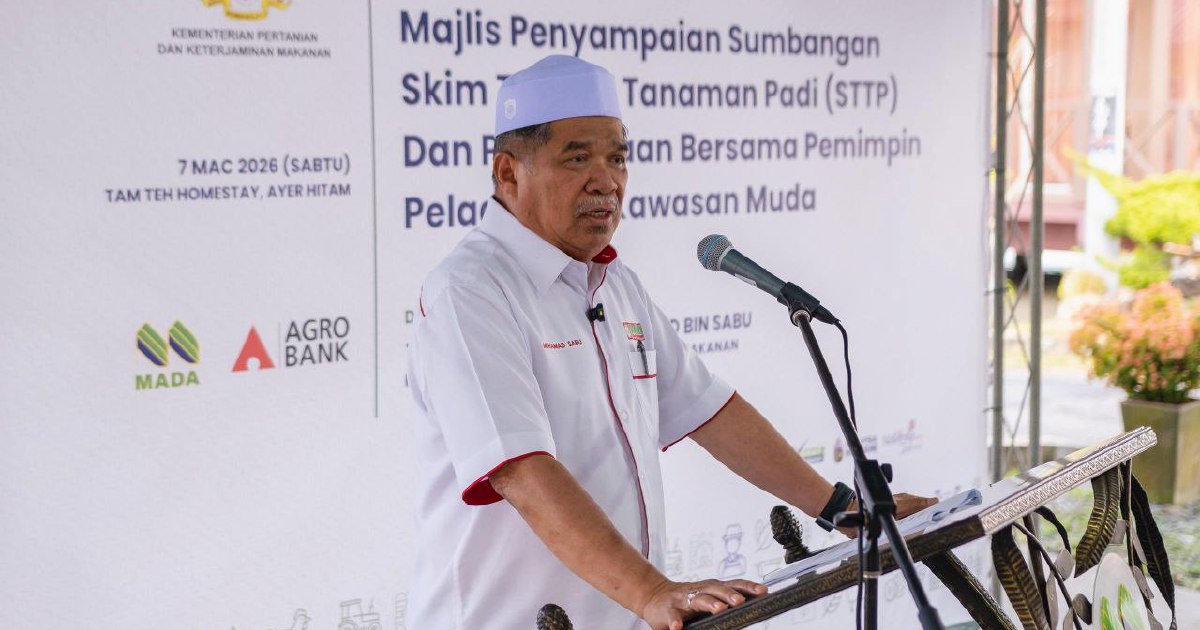
JERLUN: The ongoing drought has affected water storage levels at dams under the Muda Agricultural Development Authority (Mada), which in turn has impacted padi production for the current season.
Agriculture and Food Security Minister Mohamad Sabu said the overall water storage level at Mada dams was currently at around 40 per cent due to hot weather and inconsistent rainfall in recent weeks.
He said the drought, which began late last year, had also affected padi yields, although the situation remained under control.
“This year we are facing drought conditions that have affected padi production. The water level at our dams is now around 40 per cent.
“Although rain began falling yesterday and today, the impact remains minimal as rainfall must occur in upstream areas to increase water levels at the dams,” he said.
He said this when attending the Paddy Crop Takaful Scheme (STTP) contribution presentation ceremony and a meeting session with farmers’ leaders in the Mada area here yesterday.
According to data on the Mada website yesterday, Pedu Dam recorded a water storage level of 42.23 per cent, Muda Dam 11.12 per cent and Ahning Dam 55.96 per cent, bringing the overall water storage level to 41.55 per cent.
Mohamad said for the first 2026 planting season scheduled to begin in April, Mada planned to implement the dry seeding method as a measure to adapt planting activities to the current water supply situation.
He said the existing water supply was expected to be sufficient for the implementation of the method while awaiting more frequent rainfall forecast towards the end of April.
In another development, Mohamad said the Agriculture and Food Security Ministry was also monitoring developments in the West Asia conflict to assess its impact on the country’s food security.
He said he had instructed the ministry’s International Division and Food Security Division to prepare a report within a week to assess the potential impact on Malaysia’s food supply.
He said Malaysia’s reliance on food imports from Gulf countries remained low, as the country sourced much of its food supply from Asean nations such as Vietnam and Thailand.
“In addition, Malaysia also sources food supplies from other countries including China, Australia, New Zealand, Argentina and Brazil, as well as several South Asian countries such as India and Pakistan.
“Overall, the country’s food supply is currently not affected and remains sufficient,” he said.
However, he said the government would continue monitoring the situation as prolonged conflict could potentially lead to a rise in global oil prices, which might affect transportation costs and food prices.
“We hope the conflict can be resolved soon because if oil prices increase, it could affect transportation costs and eventually food prices,” he said.
Meanwhile, he said the supply of essential food items including beef, chicken and coconuts remained sufficient to meet demand ahead of the upcoming Aidilfitri celebration.
“God willing, everyone can celebrate Aidilfitri as usual. Supplies of chicken, beef and coconuts are sufficient,” he said.
© New Straits Times Press (M) Bhd