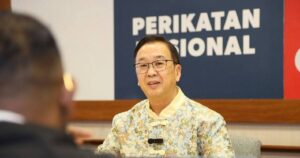
KUALA LUMPUR: Opposition members of parliament have been criticised for using former Attorney-General Tan Sri Tommy Thomas’s statement as a reference in debates on the Malaysia-United States Agreement on Reciprocal Trade (ART).
This comes after Datuk Seri Takiyuddin Hassan (PN-Kota Bharu) asked Investment, Trade and Industry Minister Tengku Datuk Seri Zafrul Abdul Aziz to comment on Thomas’s statement in a MalaysiaKini commentary, in which Thomas described ART as the worst agreement Malaysia has entered since independence.
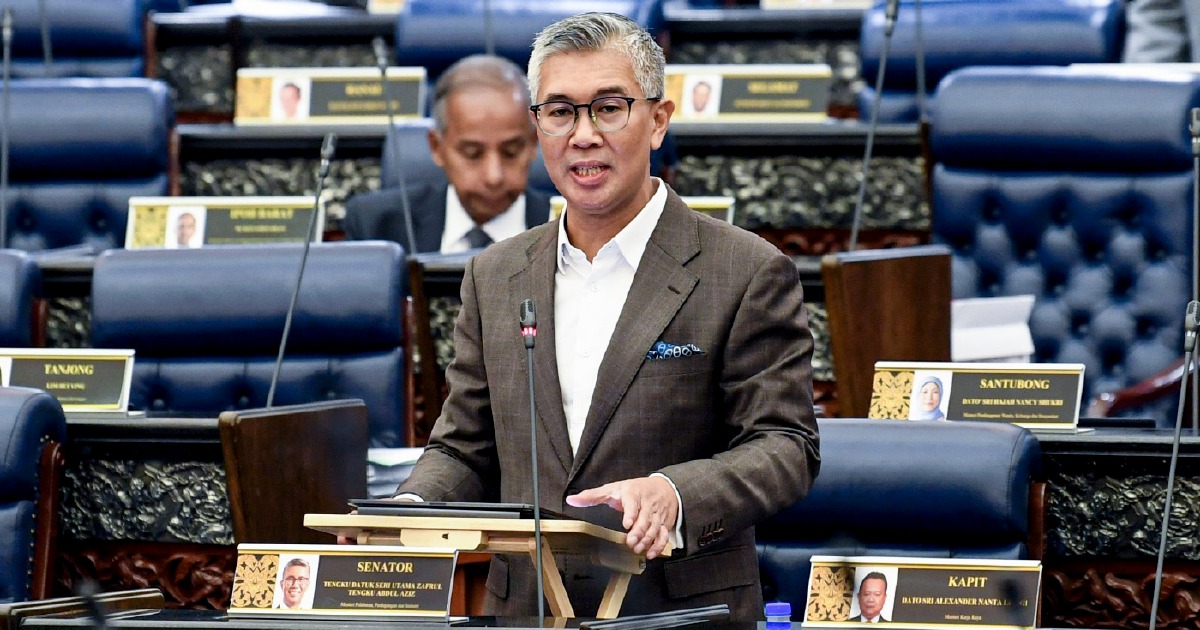
Responding to the criticism, Tengku Zafrul said it was unbecoming of lawmakers to elevate writings that had previously been rejected merely because they now align with a particular political narrative.
“I find it odd that we are suddenly upholding the writings of a former A-G whom they themselves had previously attacked relentlessly, including his book on governance.
“We were once accused of not understanding political sensitivities, but today his writing is suddenly being treated as the primary reference on trade policy.
“So, if day after day he is accused of mishandling major cases in this country, it seems unfair that today the same Tommy Thomas is elevated as the ultimate authority simply because it aligns with a political narrative,” he said during the committee-stage winding-up of the 2026 Supply Bill in the Dewan Rakyat today.
It was reported that Thomas, in his commentary published on MalaysiaKini on Nov 20, said that the reciprocal trade agreement signed by Prime Minister Datuk Seri Anwar Ibrahim and US President Donald Trump was the worst that Malaysia has entered since independence.
Thomas reportedly said that any impartial reviewer of the agreement would conclude that it is an example of a one-sided bargain.
Tengku Zafrul said ART remains structured to protect Malaysia’s sovereignty, legal authority and flexibility.
He reiterated that ART explicitly recognises Malaysia’s rights and obligations under the World Trade Organisation (WTO), including the right to safeguard national security and take necessary trade measures.
“As such, I absolutely disagree with him. From the agreement itself, the ART preamble begins by affirming a shared commitment to sovereignty, economic prosperity and resilient supply chains.
“Article 70.1 also recognises Malaysia’s existing rights and obligations at the WTO, including the right to safeguard national security and take necessary trade measures.
“It does not amend the Constitution, nor does it automatically amend any of our laws, and you are more well-versed in these matters.
“Every implementation step remains subject to Malaysia’s domestic legal processes,” he said.
He added that Malaysia did not negotiate the ART under comfortable circumstances, as it faced the threat of a 25 per cent tariff on nearly all exports to the United States, including high-value electronics and semiconductor products.
He also said joint analyses by the ministry alongside Bank Negara Malaysia, the Malaysian Investment Development Authority, the Malaysia External Trade Development Corporation and external experts indicate that without the ART, Malaysia’s gross domestic product growth could have declined by around 1.2 percentage points per year, equivalent to nearly RM30 billion annually.
“The cumulative impact on output over several years could reach hundreds of billions of ringgit.
“Approximately 1.1 million jobs, including those in industrial zones such as Kulim, Bayan Lepas, Batu Kawan, Pasir Gudang, Senai and Shah Alam, as well as over 7,000 SMEs in the supply chains of US companies operating in Malaysia, would have been exposed.
“Through the ART, we have capped the tariff at 19 per cent instead of 25 per cent or higher.
“We have locked in a zero per cent tariff for 1,711 tariff lines and successfully secured key products,” he said.
© New Straits Times Press (M) Bhd