I. Geopolitics: When Geography Re-enters Power Through Markets
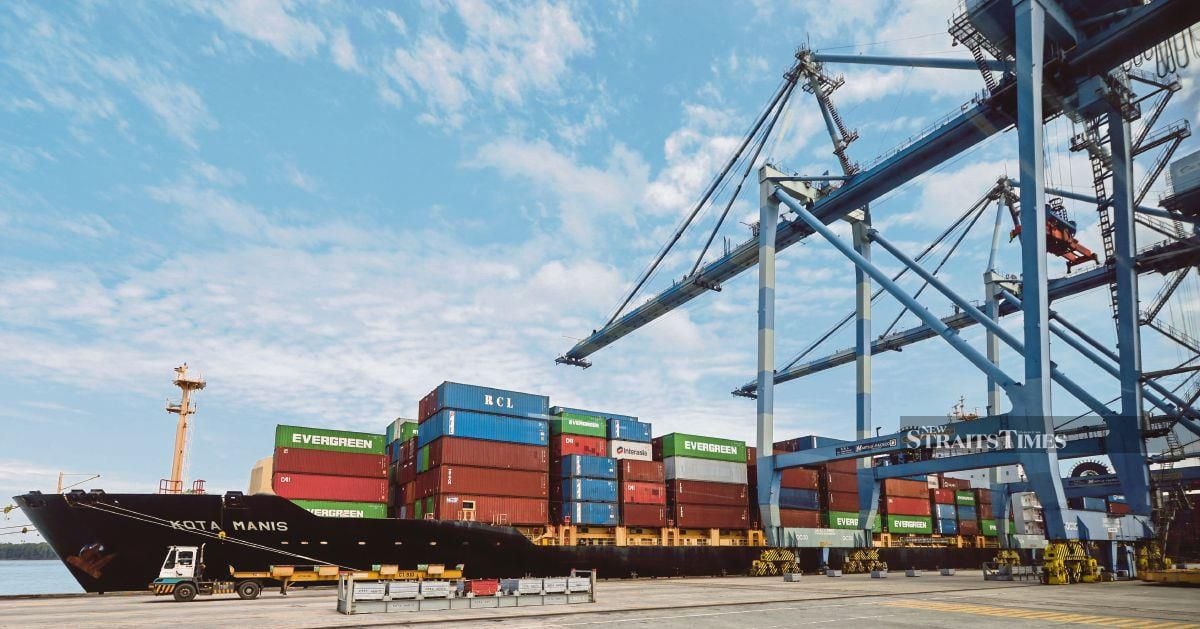
In the past year, ships have continued to pass through the Red Sea, the Strait of Hormuz, and the South China Sea. Yet they have done so under naval advisories, war-risk clauses, rerouting premiums, and insurance exclusions that did not exist at scale a decade ago.
Roughly a fifth of global oil and LNG flows still transit the Strait of Hormuz, while about 12 per cent of world trade continues to move through the Suez Canal system. What has changed is not the geography, but the price of moving through it.
For most of modern history, geopolitics was measured in territory, troops, and tonnage. States coerced by occupying land, blockading ports, or destroying fleets. Risk entered the economic system episodically — during wars, crises, and embargoes — and then receded. Peace restored commercial normalcy. That assumption no longer holds. The defining shift of the mid-2020s is not simply the return of geopolitics, but the transformation of geopolitics into a permanent economic condition. Risk is no longer an interruption to globalisation; it has become one of its operating inputs.
Today, the most consequential geopolitical actions often do not close routes, seize assets, or fire shots. They alter probabilities. They change insurance classifications. They affect financing terms. They reshape logistics models. They move markets before they move militaries. Power increasingly works not by stopping flows, but by repricing them. This is the geopolitical economy of risk.
The physical chokepoints of the world — Hormuz, Suez, Bab el-Mandeb, Malacca, and the South China Sea — have existed for centuries. What has changed is their function. They no longer operate merely as geographic constraints. They now function as economic institutions. Their condition is continuously translated into freight rates, insurance premia, delivery assurances, inventory strategies, and national inflation profiles. A chokepoint today does not need to close to exert power. It only needs to become persistently uncertain. Ships still move, but they move at a higher price. Geography has not disappeared. It has been financialised.
II. Strategic Ambiguity: Power Through Probabilities, Not Blockades
Modern chokepoint politics rarely announces closure. Instead, it operates through calibrated uncertainty. Naval deployments, risk advisories, insurance exclusions, and regulatory signals rarely aim to stop commerce outright. Their effect is subtler and more enduring: they alter probability distributions.
The Red Sea did not have to be blocked to disrupt global trade. Hormuz does not need to be shut to influence energy markets. The South China Sea does not need to erupt to affect Asian supply chains. It is sufficient that each can no longer be assumed benign.
Strategic ambiguity has thus become an economic instrument. It keeps insurers cautious, shipping lines conservative, financiers selective, and firms permanently hedged. It ensures that even in the absence of open conflict, costs remain elevated. Deterrence today operates less through visible force than through the continuous conditioning of commercial behaviour. Uncertainty itself becomes leverage.
III. Geoeconomics: How Risk Becomes Structure
Geopolitics creates uncertainty. Geoeconomics distributes it.
It translates strategic tension into insurance premia, freight spreads, working-capital requirements, inventory buffers, and competitiveness differentials. This is how geopolitical friction becomes macroeconomic structure.
Longer routes shrink effective fleet capacity. Higher insurance costs alter trade viability. Financing burdens privilege scale and state backing. Security provision increasingly follows political alignment. Trade does not collapse under these conditions. It stratifies. Large firms adapt. Smaller exporters pay more. Alliances acquire economic meaning. Neutrality becomes actuarially expensive.
The geopolitical economy of risk therefore does not end globalisation. It reprices it. It embeds security into costs, uncertainty into contracts, and alignment into balance sheets.
IV. Black Swans Replaced by Permanent Grey Zones
Traditional crisis thinking was built around shocks — black swans that arrived, disrupted, and passed. The geopolitical economy of risk functions differently.
Today’s chokepoint tensions are not improbable anomalies. They are persistent grey zones. Their influence lies not in their eruption, but in their continuity. The most important change, therefore, is not escalation. It is stickiness.
Once a corridor is labelled risky, the designation rarely fully unwinds. War-risk premia embed. Contract clauses harden. Routing models adjust. Inventories expand. Capital remains tied up in transit. The memory of insecurity becomes actuarial reality.
This is why the key strategic question is no longer whether a strait will close. That is a binary, crisis-era frame. The real question is what the new baseline cost of assurance is across the entire system. When risk becomes chronic, inflationary pressure no longer comes from shortages alone. It comes from time, redundancy, and financing. Risk itself becomes a traded commodity.
V. Geostrategy: From Control to Exposure Management
In this environment, geostrategy no longer centres on who can control chokepoints. It centres on who can design around them.
Strategic advantage lies in diversified routing, trusted insurance and finance ecosystems, redundancy in ports, data, energy, and logistics, and political relationships that translate into lower risk premia. States and firms are increasingly engaged in exposure management rather than dominance.
Power flows less through dramatic confrontation than through the quiet ability to reduce others’ options, raise their assurance costs, and shape the background conditions under which all trade takes place. This is why modern competition is increasingly waged in standards bodies, underwriting markets, compliance systems, and export-control regimes as much as in straits and seas.
The geopolitical economy of risk thus reveals a deeper transformation in how power itself is exercised. Power today is less about seizure than about conditioning, less about denial than about pricing, and less about interruption than about permanent friction. It operates not only in crises, but in everyday transactions. Every shipping contract, insurance clause, inventory decision, and capital-allocation model now carries embedded assumptions about geopolitical stability.
Strategic clarity, therefore, no longer means predicting the next shock. It means recognising that the system itself has changed. We no longer operate in a world where risk occasionally intrudes into markets. We operate in a world where markets are among the primary instruments through which risk is applied.
In such a world, power is no longer measured by who moves fastest when a crisis erupts, but by who prices risk most accurately before one arrives.
That is the geopolitical economy of risk — and it is now the grammar through which global power is written.
————————————————————————————————————
Samirul Ariff Othman is an analyst of global politics, business and economics. He is an adjunct lecturer at Universiti Teknologi PETRONAS (UTP) and a senior consultant with Global Asia Consulting. He writes on global perspectives, strategy and statecraft, offering strategic insights for a complex world. The views expressed here are entirely his own.
© New Straits Times Press (M) Bhd