DESPITE the long military buildup around Venezuela, the United States’ raid on Caracas, the capital, to abduct President Nicolás Maduro and his wife produced initial reactions of shock, outrage and scepticism from international leaders, many of them troubled by an exercise of US gunboat “diplomacy”.
Reactions were particularly angry from Latin America and from leaders who are more on the left and who have struggled with President Donald Trump and his trade, tariff and other policies in the region. Allies of Maduro including Cuba and Russia predictably condemned the US invasion, despite Russia’s own invasion of sovereign Ukraine nearly four years ago. And some, including a senior Mexican official, said that Trump was simply after Venezuela’s large oil deposits.
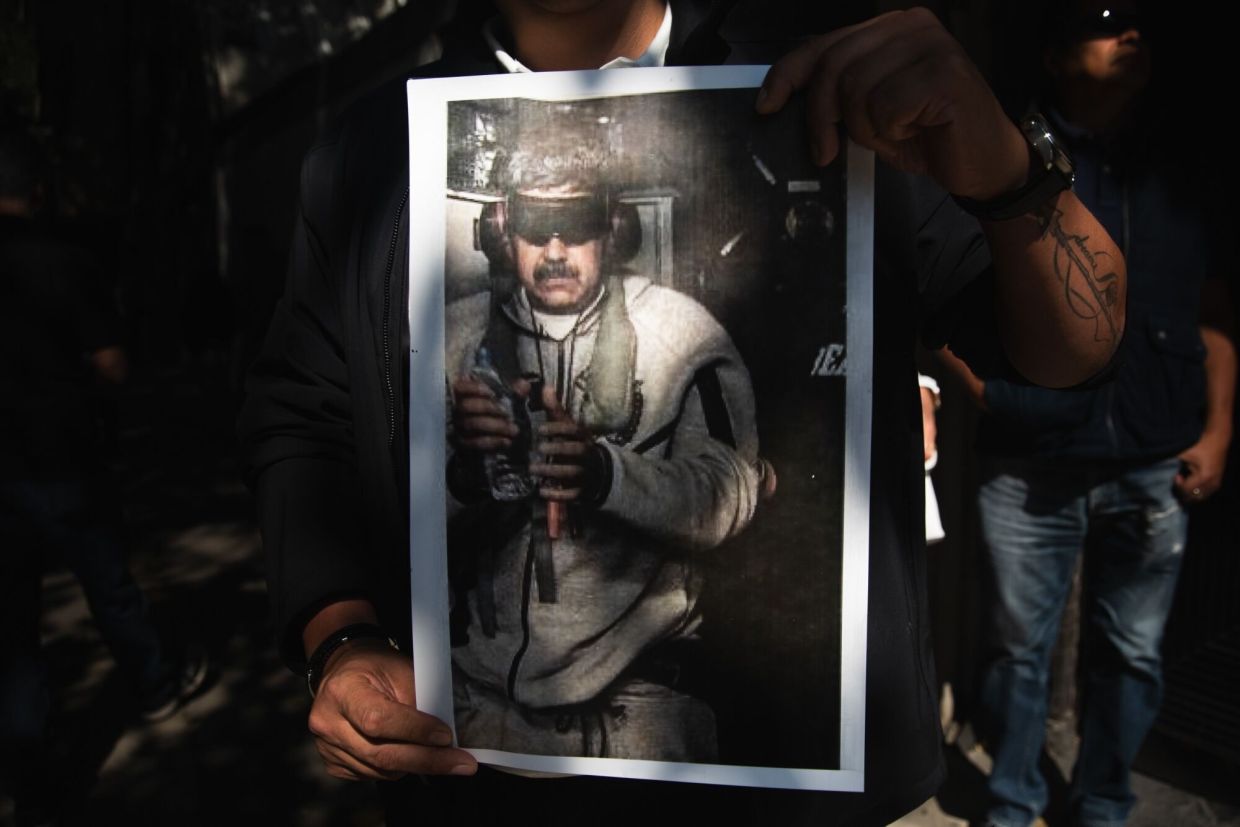
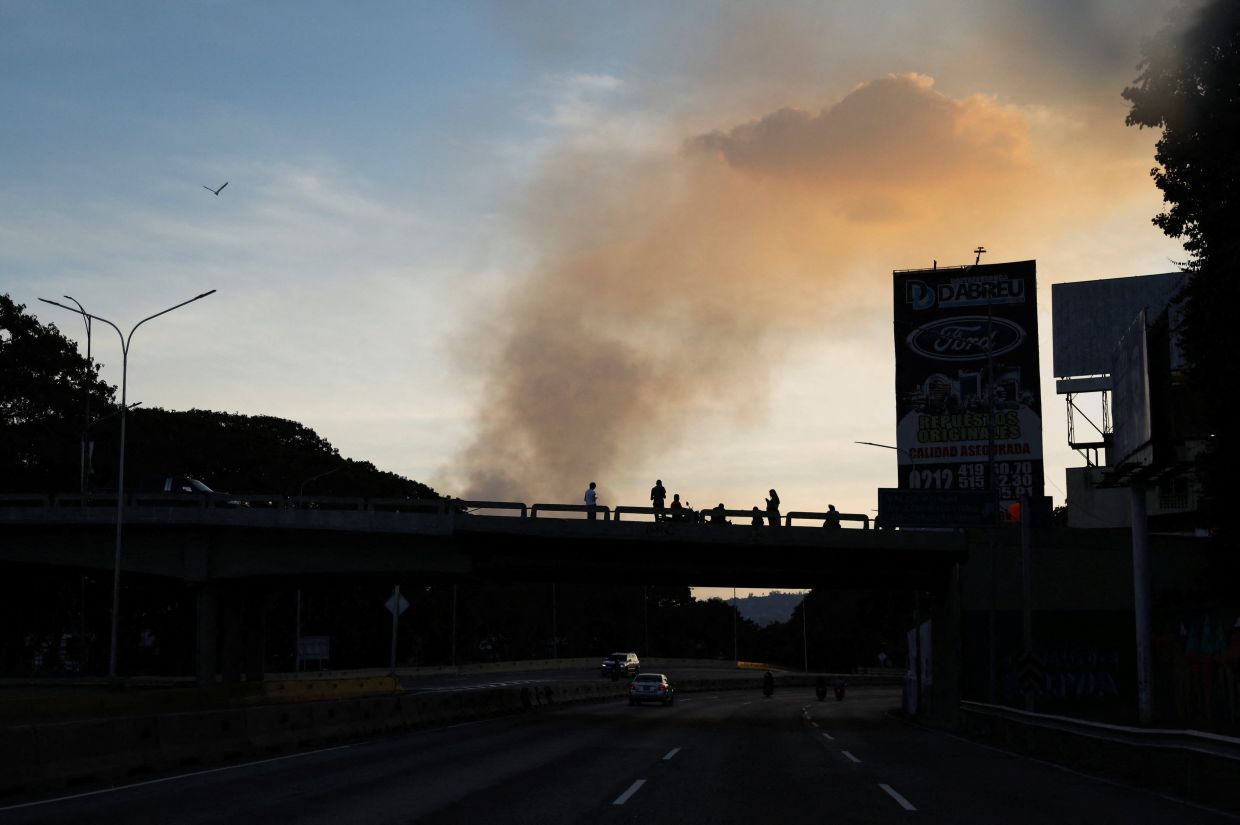 Venezuelans are shocked by Trump‘s military action against their sovereign state. — Reuters
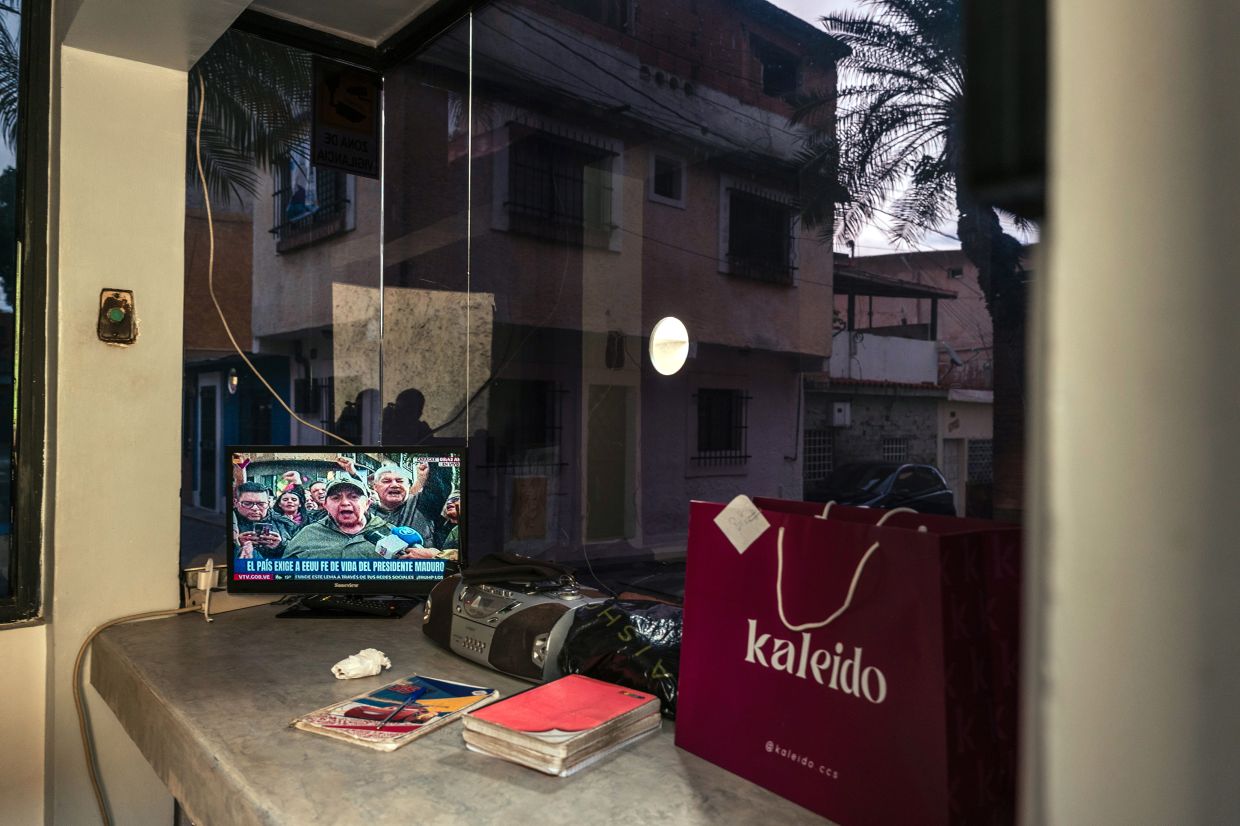
Shortly after President Donald Trump announced that the United States would “run the country,” European leaders appeared to largely support the end of Maduro’s rule and were more cautious to criticise Trump’s action.
German Chancellor Friedrich Merz wrote on social media that “Maduro has led his country into ruin” and that the US invasion is “complex and requires careful consideration” without going into further detail. “The objective” now, he added, “is an orderly transition to an elected government.”
French President Emmanuel Macron wrote on the social platform X that the Venezuelan people could “only rejoice” at the end of Maduro’s dictatorship, and did not address the US approach. Before Trump’s announcement, however, French Foreign Minister Jean-Noël Barrot wrote on social media that the military operation “violates the principle of non-resort to force that underpins international law.”
Brazilian President Luiz Inácio Lula da Silva was particularly scathing. He condemned the US action and said it “recalls the worst moments of interference in the politics” of the region.
“The bombings on Venezuelan territory and the capture of its president cross an unacceptable line,” Lula wrote on social media. “These acts represent a grave affront to Venezuela’s sovereignty and yet another extremely dangerous precedent for the entire international community.”
Colombian President Gustavo Petro wrote on X that he “rejects the aggression against the sovereignty of Venezuela and of Latin America.” He added that he was deploying forces to Colombia’s border with Venezuela, with additional support “in the event of a massive influx of refugees.”
And Chilean President Gabriel Boric, a leftist whose term is coming to an end, also condemned the attack.
“We express our concern and condemnation of the military actions by the United States taking place in Venezuela, and we call for seeking a peaceful solution to the serious crisis affecting the country,” he said on social media. Like many, he called for dialogue to resolve the crisis.
Cuban President Miguel Díaz-Canel, a Maduro ally, denounced “a criminal attack” by the United States and called for “urgent reaction” from the world.
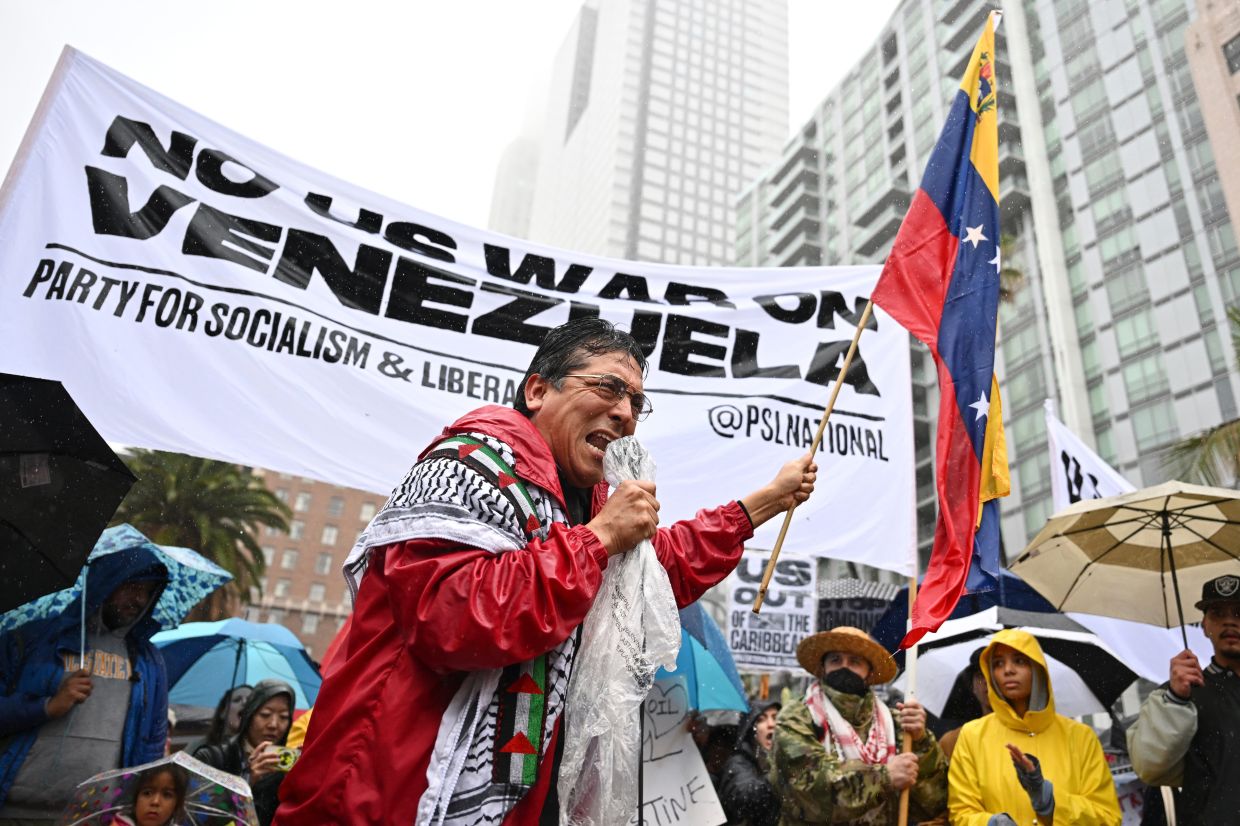 People around the world were also angered by the US attack on the sovereign state of Venezuela.
The reaction of Russia, another ally of Maduro, was strongly worded and apparently without irony. Russia, having invaded Ukraine four years ago and continuing to fight there, condemned the US military action as “an act of armed aggression against Venezuela.” The Russian Foreign Ministry, in a statement, called the US attack “deeply concerning and condemnable,” adding: “Ideological hostility has triumphed over businesslike pragmatism.”
Russia said that it supports the leadership of Venezuela and called for an urgent meeting of the UN Security Council to discuss the US military action.
Iran, which has also been threatened in the past few days by Trump, issued a statement Saturday condemning the US attack and accusing the United States of violating the United Nations Charter.
But Trump has supporters in the region, too. Argentine President Javier Milei celebrated the abduction of Maduro. “Liberty advances,” he wrote on X.
And Prime Minister Kamla Susheila Persad-Bissessar of neighbouring Trinidad and Tobago, who drew criticism for her support of Trump’s military buildup against Maduro in the name of combating drug trafficking, emphasised that her country played no role in the US operation and maintains peaceful relations with Venezuela.
The Mexican government “condemned energetically” Washington’s unilateral military action in Venezuela, warned of regional instability and urged dialogue, according to a statement from the country’s Foreign Ministry. “Mexico makes an urgent call to respect international law, as well as the principles and purposes of the UN Charter, and to cease any act of aggression against the Venezuelan government and people,” read the statement, which was posted on X by Mexican President Claudia Sheinbaum.
Gerardo Fernández Noroña, the former president of Mexico’s Senate and an influential leader of the country’s governing Morena party, said the US actions were aimed at taking control of Venezuela’s oil. “President Maduro has not been captured; he was deprived of his liberty through a military intervention by the United States government,” Fernández Noroña said on social media. “He is a prisoner of war. They seek through this to subdue the Bolivarian Republic of Venezuela in order to seize its natural resources.”
The Europeans were more circumspect. Kaja Kallas, the European Union’s foreign policy chief, said she had spoken to Secretary of State Marco Rubio about events in Venezuela. “The EU is closely monitoring the situation in Venezuela,” she wrote in a social media post. “The EU has repeatedly stated that Mr. Maduro lacks legitimacy and has defended a peaceful transition. Under all circumstances, the principles of international law and the UN Charter must be respected. We call for restraint. The safety of EU citizens in the country is our top priority.”
The president of the European Council, António Costa, said that the European Union wants de-escalation in Venezuela. Costa wrote on X that the EU “would continue to support a peaceful, democratic and inclusive solution in Venezuela.”
Spain, with its close ties to Latin America, offered to mediate in the crisis in an attempt to broker a negotiated and peaceful solution. “Spain calls for de-escalation and restraint,” the Foreign Ministry said in a statement, adding that it was prepared to support a “democratic, negotiated and peaceful solution.
As news emerged of the US intervention, British Prime Minister Keir Starmer was also cautious to take an outright position, saying “I will want to talk to the president” and to allies to first “establish the facts.” After Trump’s announcement, he wrote on X that the US sheds “no tears” about the end of Maduro’s regime and “will discuss the evolving situation with US counterparts” in hopes of a peaceful transition.
The Europeans have been mostly consumed with Ukraine and helping President Volodymyr Zelenskyy refine a peace proposal that would satisfy Trump and then be presented to Russia, which has made it clear that it is unacceptable in current form. On Saturday, national security advisers of the main European countries were in Kyiv, Ukraine’s capital, on that matter, which is of more strategic importance to the Europeans than the fate of Maduro.
Ukraine itself largely supported the actions of Trump, arguing, as Foreign Minister Andrii Sybiha did, that Ukraine defends “the right of nations to live freely, free of dictatorship, oppression and human rights violations.” He accused Maduro’s government of having “violated all such principles in every respect.”
Denmark, now caught up in a diplomatic tussle over Greenland with the US, has not commented.
But perhaps the most interesting criticism of Trump came from Jordan Bardella, the likely presidential candidate of France’s far right National Rally party, which has received support from Trump and Vice President JD Vance.
“No one will miss” the Maduro regime, Bardella said on social media. “That said, respect for international law and the sovereignty of states cannot be applied selectively,” he added. “The forcible overthrow of a government from the outside cannot constitute an acceptable response, only exacerbating the geopolitical instability of our time.”
In the face of such military intervention, he added, France must “rearm our nation, to strengthen our industrial and military capabilities,” in order to “make its independent voice heard on the international stage, one that respects sovereignties.” — ©2026 The New York Times Company
This article originally appeared in The New York Times.