
ZAHRATULHAYAT MAT ARIF
SUNGKAI: Hidden deep in the jungle here, an unheralded “army” works every day to save Malaysia’s wildlife, from majestic tigers to tiny tortoises, caught up in criminal enterprises.
For more than a decade, the National Wildlife Rescue Centre (NWRC) has served as a lifeline for wildlife in distress, treating everything from severely injured Malayan tigers to orphaned sun bear cubs and exotic birds confiscated from illegal traders.
NWRC chief Hazril Rafhan Abdul Halim said the centre’s operations revolve around responding to emergencies, stabilising rescued animals and preparing them for rehabilitation or release.
“Here, we receive animals rescued from human-wildlife conflicts, as well as animals hit by vehicles or those caught in snares.
“We also receive wildlife surrendered by the public, and animals seized during enforcement operations,” he told the New Straits Times.
Hazril Rafhan said the centre housed many species.
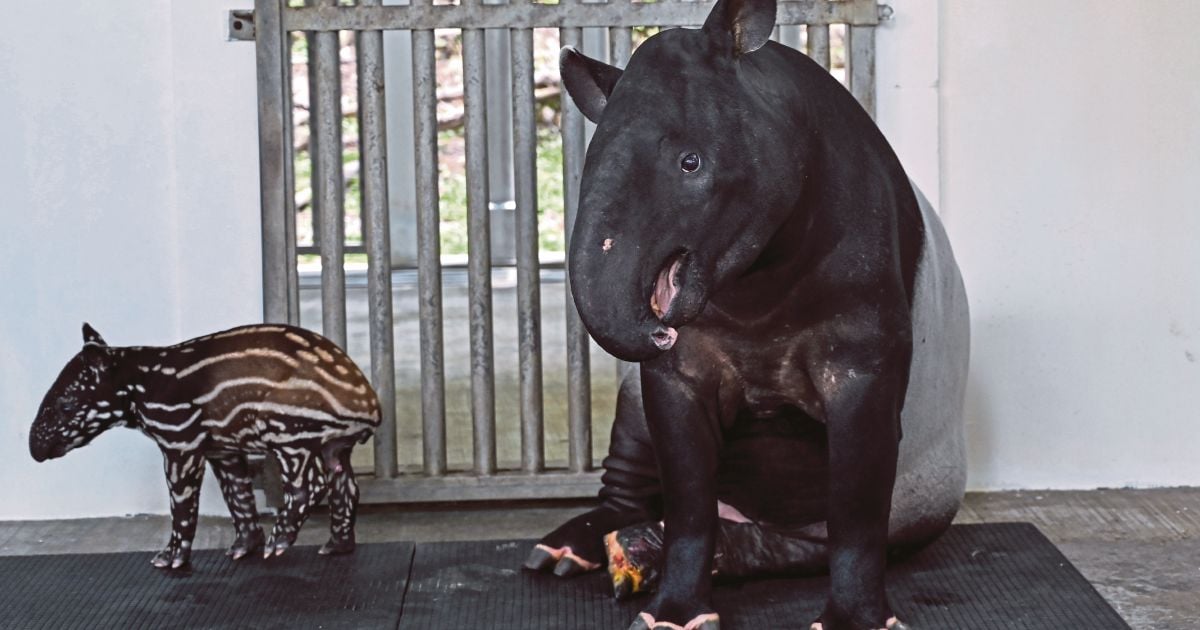
Among them are large mammals like tigers, tapirs and bears; smaller mammals such as leopard and marbled cats; and reptiles, including local and international tortoise species.
“We also receive snakes and primates, like gibbons, monkeys, macaques and siamang for treatment.
“After treatment, we rehabilitate them. Some animals are tame, some are semi-wild and some completely wild.
“The rehabilitation time depends on their behaviour.
“Tame animals take longer to rewild, while semi-wild or wild animals can be ready sooner.”
The Malayan tigers at the centre, he said, would remain in captivity as most had been in conflict with humans, and releasing them could endanger communities.
Hazril Rafhan added that the centre’s tigers are part of the Malayan Tiger Breeding in Captivity Programme (MyBIT) — an initiative by the Wildlife and National Parks Department (Perhilitan) in collaboration with Malaysian zoos.
“Five years ago, wild tiger numbers dropped below 150, prompting the MyBIT programme to be introduced two years ago to boost the population.
“At NWRC, we support the breeding programme along with Zoo Negara; Zoo Melaka, A’ Famosa; Zoo Taiping and Zoo Kemaman,” he said.
He said the facility has 40 staff, mainly keepers assigned to different enclosures, ensuring the animals are well cared for and their areas kept clean.
“We will release animals when the time is right.
“We often assist state Perhilitan officers on rescue missions involving large mammals like tigers, elephants and tapirs,” he said.
Hazril Rafhan said NWRC has 11 Malayan tigers — five males and six females — and there are three breeding pairs. Some cubs have been born in recent years.
The male tigers are Sungkai, 11; Bobby, 14; Awe Jeli, 14; Yop Kuang, 8; and Yop Kinta; 2.
The females are Cindai, 11; Queen, 7; Mek Santong, 8; Kahang, 1; Nicky, 23 and Chemon, 21.
He said Sungkai and Cindai were part of a litter of three born to Scarface and Tanjung.
Their brother, Wira, did not survive.
“Another birth this year did not survive due to complications.
“We expect more cubs in the next two to three months from our breeding pairs,” he said.
Hazril Rafhan said this year, NWRC received more than 9,000 animals, mostly reptiles like tortoises seized at border checkpoints.
“After releases and natural deaths, about 3,400 animals remain at the centre,” he said adding that RM1.5 million is spent annually on food.
He said most of the seized animals are smuggled in from India or Indonesia, and are often destined for China, Vietnam, Cambodia or Europe.
“Poachers from Myanmar, Cambodia, Vietnam and Thailand also enter Malaysia for agarwood, while setting hundreds of snares in forests,” he said.
He said programmes like Biodiversity Patrolling and Protection, Op Bersepadu Khazanah and Orang Asli involvement have helped species like tigers and gaur recover.
He said tigers caught in snares would usually injure their fore or hind legs.
“We received one tiger named Awang Chini who suffered severe injuries to his hind paw.
“We conducted two surgeries but could not save him. There are also tigers we rescued that survived despite having amputations,” he said.
He said NWRC has three veterinarians who assess, treat and transfer animals to appropriate blocks.
“Tigers at the centre are not released, but their offspring under MyBIT will be rewilded.
“This is Malaysia’s first tiger rewilding project, and interaction with humans is minimised.
“Feeding and enclosure structures are designed to stimulate natural behaviours.
“Tiger cubs eventually go to Malayan Tiger Conservation Centre in Pahang for full rewilding.
“NWRC mainly functions as a hospital and breeding support centre.”
When asked about the centre’s limitations, he said the enclosures are sufficient, but in the future, they may need more space as more wildlife are rescued.
“Deforestation in Peninsular Malaysia causes more human-wildlife conflict, leading to more animals being sent here,” he said.
He warned the public that wildlife are not suitable to be kept as pets, but observed that some people, including celebrities, did so anyway.
“Wildlife are part of the ecosystem and have an important role.
“We must share the responsibility of protecting them, alongside government agencies, so they do not go extinct for future generations,” he said.
© New Straits Times Press (M) Bhd