KINABATANGAN: Political stability and the promise of continued development were cited as the main factors behind Barisan Nasional’s (BN) emphatic victories in the Kinabatangan parliamentary and Lamag state by-elections, political analysts said.
Dr Haryati Abdul Karim, senior lecturer at the Faculty of Social Sciences and Humanities, Universiti Malaysia Sabah (UMS), said BN‘s role as part of the Sabah unity government bolstered voter confidence in the party’s ability to represent the interests of Kinabatangan and Lamag at both federal and state levels.
“These factors are crucial to ensuring policy continuity and the delivery of development, particularly in rural areas still grappling with basic infrastructure challenges,” she told Bernama.
“BN‘s inclusion in the unity government gave it an advantage in the by-elections. More importantly, voters value stability to address essential issues such as roads, water, and electricity – a current priority for all Sabahans.”
Haryati said that BN’s Kinabatangan candidate, Mohd Kurniawan Naim Moktar, and Lamag candidate, Mohd Ismail Ayob, successfully attracted grassroots support through their approachable personalities, fresh ideas, low-profile campaigning, and active community engagement.
“The signal from voters is clear: they want leaders who are humble, regularly engage with the community, and listen to their concerns – qualities embodied by Mohd Kurniawan Naim and Mohd Ismail,” she said.
Tony Paridi Bagang, senior lecturer at the Faculty of Administrative Science and Policy Studies, Universiti Teknologi MARA (UiTM) Sabah, agreed that political stability was the key driver behind BN’s success.
“BN’s position in the state government, coupled with voter sentiment, strengthened perceptions of stability and confidence in the continuity of governance and development,” he said.
He added that cohesion within the Sabah unity government allowed BN’s machinery to operate more systematically, particularly in rural areas where longstanding relationships and consistent representation were valued.
“In Kinabatangan and Lamag, BN benefits from deep-rooted networks and the combined support of government allies, including Gabungan Rakyat Sabah (GRS), reinforcing the perception of political stability. Emotional factors linked to the leadership legacy of the late Datuk Seri Bung Moktar Radin also played a role,” he added.
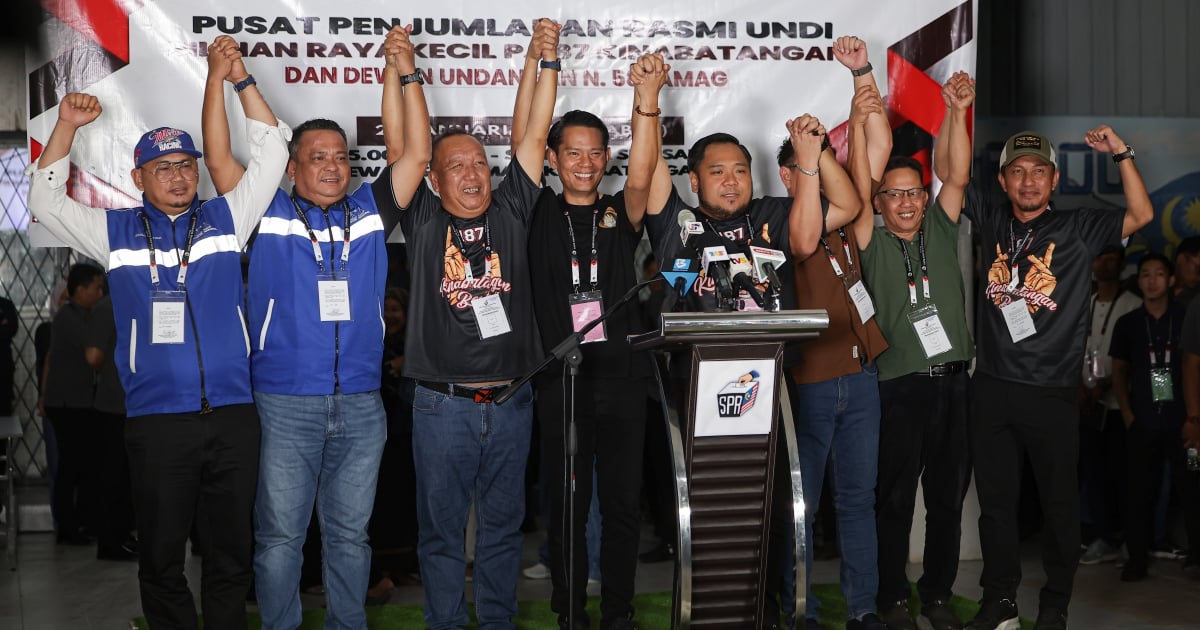
In the by-elections, Kurniawan Naim retained the Kinabatangan parliamentary seat, previously held by his father since 1999, with a majority of 14,214 votes, defeating Datuk Saddi Abdul Rahman (Warisan) and independent candidate Goldam Hamid.
Meanwhile, Ismail secured the Lamag state seat with a majority of 5,681 votes, defeating Warisan candidate Mazliwati Abdul Malek.
Both by-elections were held following the death of the incumbent, Bung Moktar, aged 66, on Dec 5 last year. — BERNAMA
© New Straits Times Press (M) Bhd