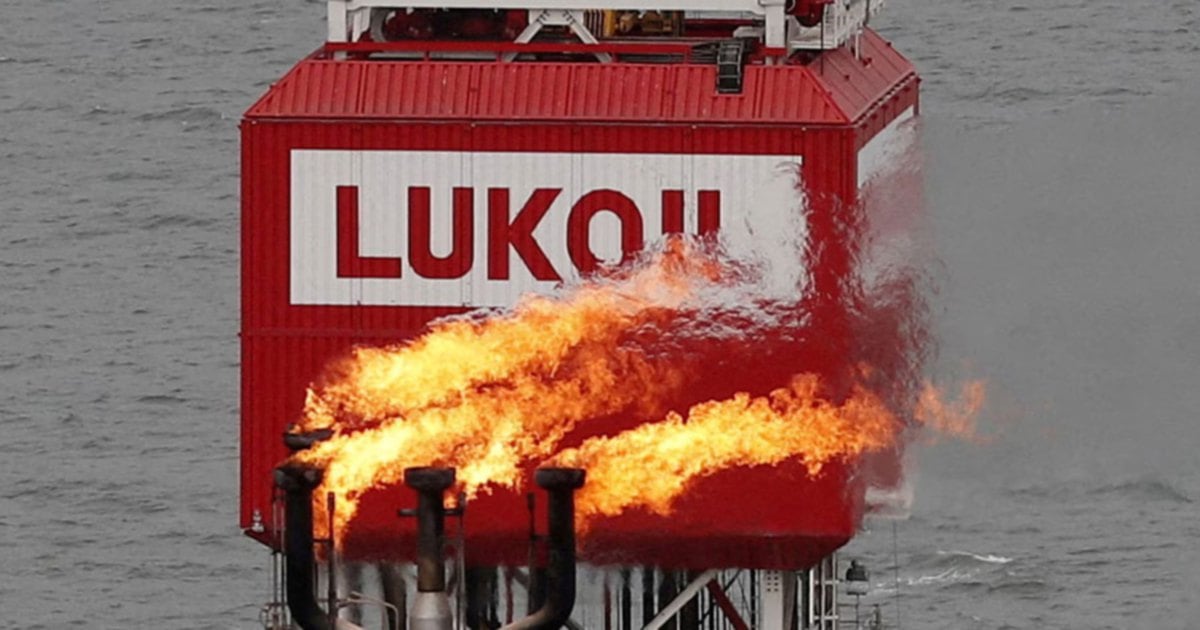
UNITED States sanctions on Russia’s oil majors Lukoil and state-owned Rosneft — and any entities owned by them — could reshape the global oil market, say analysts. If they are right, it would indeed be a great reshaping.
There are at least two reasons why this could be so. The oil majors, especially Lukoil, have huge assets across Europe, the Middle East, Africa, Latin America and Central Asia.
Reuters analysis shows Lukoil was scrambling to offload US$22 billion before a temporary US authorisation expired on Dec 13.
The Russian company’s most lucrative interests are said to be upstream in Iraq, Kazakhstan, Azerbaijan, Mexico, and stretching from Ghana to Nigeria and Egypt.
European and US companies are just waiting like vultures to take over what commercial negotiations failed to grant them. If economics fails you, try geopolitics.
Expect the forced sale of the two oil majors to now reshuffle ownership of large fields and refineries and reroute the global supply chain, the analysis suggests. The word “market” would lead one to think of the economics of supply and demand.
From the get go, everything about oil was never about economics. From the division of the Middle East into French and British interests to the establishment of Israel on Palestinian territory have been the result of the geopolitics of oil.
Now ending the war between Russia and Ukraine has taken a geopolitical turn, too. Would Russia end the war as the sanctions begin to bite?
It depends on not just Russia, but also oil-buying behaviour of countries that have been purchasing heavily discounted crude from Moscow.
The US is after China and India, though the latter is said to be shifting its crude purchases given the risks of sanctions. China is unlikely to be dictated by US sanctions.
Let’s not forget international sanctions first began after Russia invaded Ukraine in 2022 — though more were added later and on Oct 23 — and China is still buying Russian oil.
As it says, it is standing up to a bully. But Türkiye, India and Brazil have already reduced purchases, leaving record volume of Russian oil floating at sea, Reuters analysis shows.
China is expected to absorb some of the volumes of crude at even a further discount.
As the sanctions from the EU and the US pile up, would Russia rush to the negotiation table to end the protracted war? Unlikely. Because the Russia-Ukraine war is about territory and sovereignty. These are not easy to resolve.
For the same reason, the Cambodia-Thailand conflict, which had the appearance of a peaceful end, has flared up again.
Sure, the sanctions are biting, with fossil fuel revenues, which contribute a quarter of Russian federal income, dropping to the lowest ever level since the invasion began.
In the final analysis, conflicts and wars don’t end by themselves; they must be brought to an end.
Being the stronger among the two, Russia must make all the necessary efforts to bring the war to an end. Heft isn’t the determining factor; justice is.
© New Straits Times Press (M) Bhd