
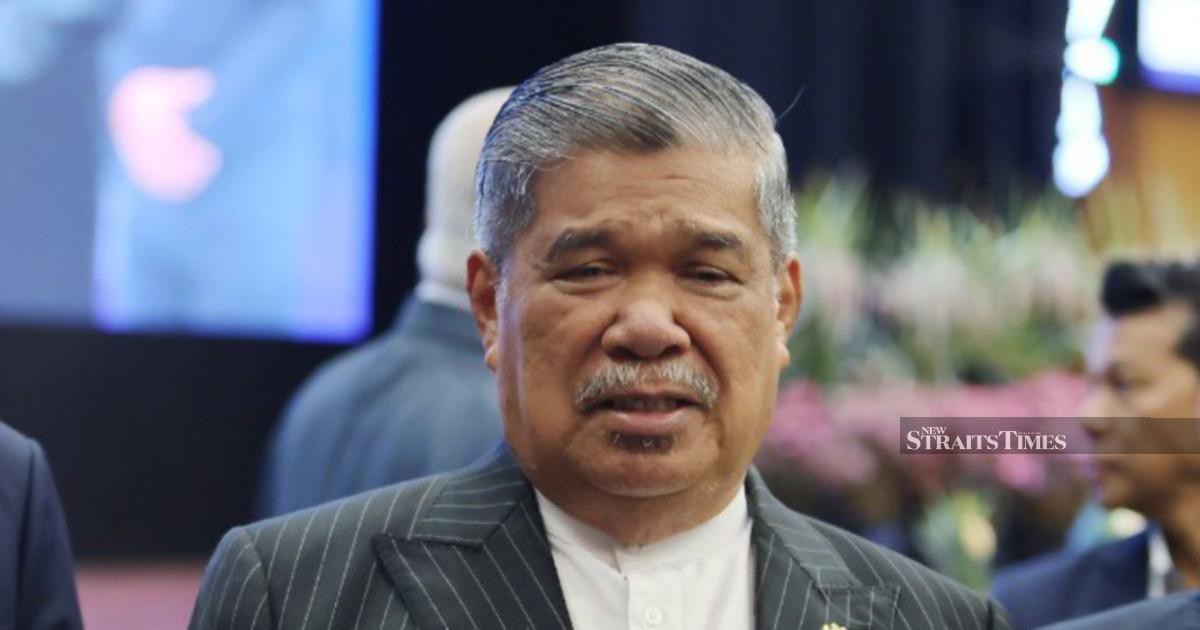
KUALA LUMPUR: The Agriculture and Food Security Ministry is developing a dedicated National Food Security Indicator and Index to provide a more holistic, Malaysia-specific assessment of the country’s food security status.
Its minister Datuk Seri Mohamad Sabu said the initiative, undertaken with the Economy Ministry and the Department of Statistics Malaysia (DOSM), would replace reliance on the Global Food Security Index (GFSI), which ceased publication in 2022.
“The indicator is being designed to evaluate food security in a more holistic and contextual manner, taking into account Malaysia’s own environment and challenges,” he said in a written parliamentary reply.
Wee Jeck Seng (BN–Tanjung Piai) had asked about national strategies to boost domestic food production, reduce reliance on imports of critical raw food commodities, and outline production targets and food security benchmarks. He also sought clarification on measures such as maintaining strategic food inventories to ensure adequate stock access and implementing efficient distribution systems in the event of a crisis.
Mohamad said the framework would measure four key dimensions of food security — availability, accessibility, utilisation and stability.
In the final GFSI assessment, Malaysia ranked second in Southeast Asia and placed 41st out of 113 countries, with a score of 69.9 per cent.
He said among the key metrics for national food security were the maintenance of strategic food inventories to ensure sufficient stock access and the implementation of resilient distribution systems in the event of supply chain disruptions.
Supplies of essential commodities such as rice, fish, chicken, eggs and vegetables were currently stable and under control, he said.
“This stability is supported by the capabilities of the Federal Agricultural Marketing Authority (Fama) and the Malaysian Fisheries Development Authority (LKIM) in ensuring sufficient stock access and coordinating effective distribution systems through strong logistics networks, collection centres and marketing channels,” he said.
Mohamad added that the system would enable rapid and orderly food distribution to safeguard continuity of supply for the people.
Overall, he said the ministry was confident that integrated strategies, backed by cooperation among ministries, departments, agencies and state governments, would strengthen coordination and effectiveness in national agri-food planning.
“This will support increased domestic food production and reduce import dependency, ensuring sustainable national food security,” he said.
© New Straits Times Press (M) Bhd