
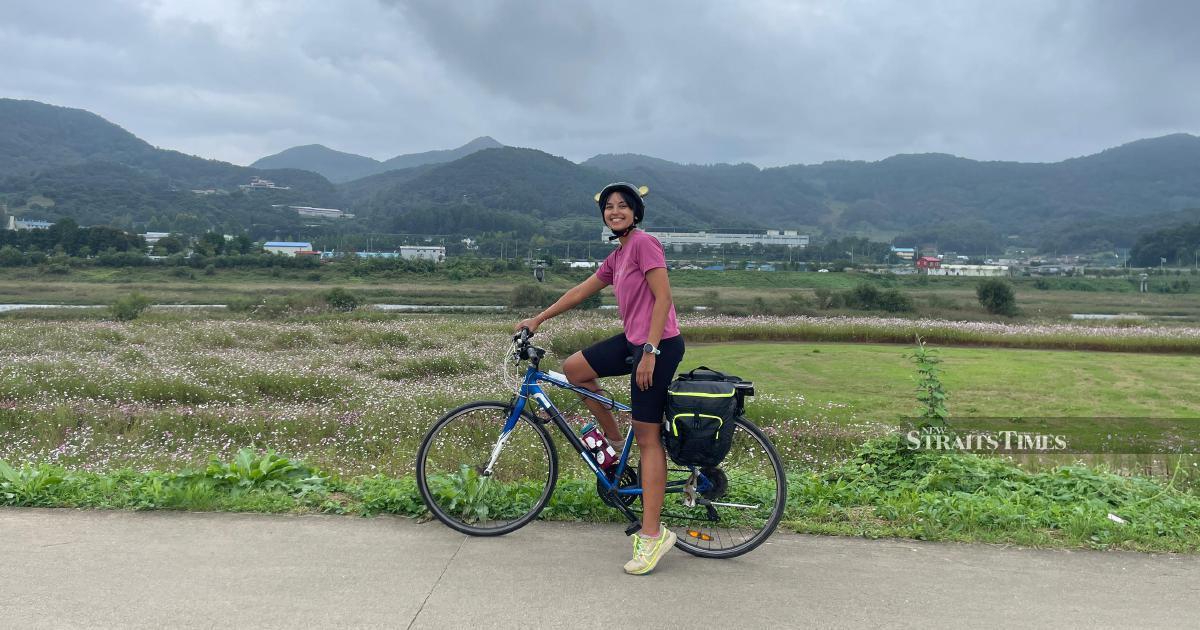
LAST month, I had one of the biggest adventures of my life: I cycled across South Korea, from the bustling streets of Seoul to the seaside city of Busan — a 633km journey over seven days. It was my first bike-touring trip, and I couldn’t have asked for a better route.
The path was mostly flat as it followed the Han and Nak Dong rivers. Some days I rode over mountains, other days along riverside parks, farmlands and quiet country roads.
The bike lanes were often separated from traffic, and where I shared the road with cars, lanes were painted bright blue and clearly marked.
Fellow cyclists would cheer me on throughout the journey, shouting “Fighting!”— Korean slang for “You can do it!” or “Good luck!” — as they cycled past me.
The experience left me in awe. The South Korean government had created a continuous bike lane spanning the peninsula, connecting urban hubs, small towns and rural landscapes seamlessly.
One of the most memorable parts of the trip was collecting stamps in my cycling passport. To promote the bike lane, South Korea introduced a system where cyclists could purchase a “Korea Cross-Country Cycling Road Tour” passport and collect stamps at checkpoints along the route.
Complete a section and you earned a special certification stamp; complete multiple routes, and you could even get a medal, though the medals had to be purchased.
It got the wheels in my brain turning. What if Malaysia built something similar? A dedicated bike lane that followed the country’s main rivers, stretching across the peninsula, with local attractions, homestays and checkpoints along the way.
MALAYSIAN CYCLING ROUTE
[[nid:1326691]]
I can picture it vividly: a paved, traffic-free lane along Sungai Klang and other rivers, clearly marked, free from motorbikes and parked cars.
Cyclists could ride alongside rivers, stopping at riverside mamaks for teh tarik and nasi lemak, visiting local artisan shops, or resting in pondoks for picnics and bird-watching. Homestays, weekend escapes and bike rental shops could make the route both practical and immersive.
Along Seoul’s Han River, riverside parks connected by cycling paths provide essential green spaces where city dwellers can breathe, exercise and connect.
Kuala Lumpur could develop similar areas along Sungai Klang and other rivers, offering urban residents spaces to decompress from busy city life.
I know there are hurdles to such a plan, and it may not be a top priority yet.
Think City’s Urban Solutions director Daniel Lim notes: “Cycle lanes in cities are plausible, but their success depends on local context and feasibility.
“In countries where cycling is already a primary mode of transport, dedicated lanes work well because their use is intuitive and consistent. But in places where cycling is still emerging, lanes can be underutilised or misused.”
ECONOMIC DRIVER
[[nid:1326690]]
A national bike lane could also drive economic growth. Korea’s free bicycle paths attracted tourists to towns they might not otherwise visit, supporting motels, restaurants and local attractions.
Cyclists were spending in small towns and cities along the route, stimulating local economies.
Malaysia could see the same effect, especially if public transport options were integrated — for example, taking a train back after a multi-day ride.
Building cycling infrastructure encourages a culture of biking, reduces congestion, cuts carbon emissions and strengthens our country’s position as an eco-tourism destination.
Lim says: “Infrastructure doesn’t just stimulate the economy; it shapes culture. Shared streets may make sense now, but when cycling becomes mainstream, dedicated lanes will follow. Cities evolve and infrastructure should evolve alongside them.”
SOCIAL INCLUSION, SAFETY AND PUBLIC HEALTH
[[nid:1326689]]
MikeBikes, a social enterprise running KL cycling tours since 2018, has witnessed how cycling can drive both joy and economic activity.
Operations manager Arif Aiman says: “A national bike lane could promote domestic tourism, attract international cycle-tourists and stimulate hospitality, food and local services in towns.”
Cycling also promotes social inclusion. Low-cost mobility allows people without cars to access jobs, services and opportunities, reducing inequalities.
Regular cycling along safe, designated lanes improves public health, offering accessible exercise to more Malaysians.
Designated lanes also enhance safety, with better surfaces, signage and lighting benefiting recreational riders, commuters and local communities alike.
CYCLING SPINE
[[nid:1326688]]
Kuala Lumpur could start by developing a lane along Sungai Klang, transforming the River of Life into a bike-friendly corridor reaching the Malacca Strait.
Cafes, restaurants, homestays and bike rental shops along the route could thrive, while cleaner rivers and green spaces would sustain wildlife and communities.
Lim emphasises the interconnection of infrastructure and urban life, saying: “Shared streets with wider pavements, nature-based solutions and more green space create environments where cycling, walking and other uses coexist. As cycling grows, these can evolve into dedicated lanes.”
Creating a dedicated cross-country cycling route may seem ambitious, but it could connect communities, boost the economy, improve public health and give people space to enjoy their cities and landscapes.
Rivers could become lifelines for recreation, nature and business, while journeys themselves turn into experiences rather than just transit.
Cycling in Korea also reminded me of the simple joys of movement, fresh air and discovery — the reason such infrastructure has cultural, economic and social significance.
If Malaysia could invest in a national bike lane, it wouldn’t just be about bikes; it would be about reclaiming spaces for people, fostering community and imagining a cleaner, greener and more connected country.
© New Straits Times Press (M) Bhd