KUALA LUMPUR: Malaysia should consider renegotiating the Agreement of Reciprocal Tariff (ART) framework with the United States as global trade uncertainty intensifies, following legal challenges to President Donald Trump‘s sweeping tariff regime, an economist said.
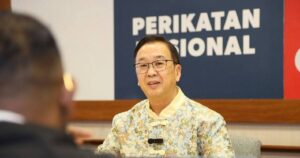
Associate Professor Dr Firdausi Suffian said the evolving policy environment in Washington presents a window for Malaysia to reassess the terms of the framework to better safeguard its export interests.
“In this shifting landscape, Malaysia should seize the moment to renegotiate the ART framework if possible to ensure that its export interests remain protected,” he said in a statement.
Firdausi said the global trade outlook remains highly uncertain after the US Supreme Court struck down tariffs imposed under the International Emergency Economic Powers Act (IEEPA), ruling that the measures exceeded the authority of the statute.
Following the decision, Trump announced a new 10 per cent global tariff that was quickly raised to 15 per cent using Section 122 of the Trade Act of 1974, although the provision allows such measures to remain in force for only 150 days unless approved by Congress.
“With tariffs imposed under the IEEPA now nullified, the key question is whether the so-called ‘trade deals’ with countries remain relevant,” he said.
Malaysia and the US have broadly reached an understanding on the ART framework, although the agreement has yet to be fully operationalised.
While both governments have indicated their commitment to the arrangement, Firdausi said there remains considerable room for further consultation and policy adjustments as negotiations continue.
“ART is politically binding rather than statutory,” he said, adding that this differs from agreements such as Indonesia’s New Golden Age pact with the US, which locks in a fixed tariff rate regardless of future changes in US trade law.
Malaysia initially faced tariff exposure of as high as 47 per cent during the early phase of the trade tensions but managed to reduce the rate to 24 per cent.
Under the ART framework, the tariff level was further lowered to 19 per cent, with zero tariff privileges granted to 1,711 Malaysian products across sectors such as electronics, rubber and palm oil derivatives.
The arrangement has helped stabilise trade relations and is estimated to have prevented potential export losses of up to RM15 billion.
However, Firdausi said some analysts believe the actual value of goods benefiting from the zero tariff privileges may be smaller than initially estimated.
“Some analysts contend that the estimated actual value of the exempted goods was only about RM4.4 billion, merely 2.4 per cent of total exports,” he said.
Despite these concerns, ART continues to provide Malaysia with a degree of certainty in an increasingly volatile global trade environment.
The US is Malaysia’s third largest trading partner, with bilateral trade reaching about RM367 billion in 2025, representing growth of 13 per cent from the previous year.
Firdausi said the tariff crisis could unfold in two ways: Trump could introduce a more aggressive tariff regime using other presidential powers, or the administration could be forced to comply with the Supreme Court ruling that restricts such measures.
“Either way, US trade policy remains highly fluid,” he said.
He added that the episode reflects a broader shift in the global economic order, with major powers increasingly prioritising domestic resilience over globalisation.
For Malaysia, he said, strengthening the domestic economic structure must remain a national priority, including moving up the value chain and investing more heavily in human capital and innovation driven industries.
© New Straits Times Press (M) Bhd