SOMETIME in 2005, a group of Malaysian journalists was flown into Thailand’s restive south from Kelantan to help mediate an unlikely negotiation.
Local insurgents had taken hostages and made an unusual request: they wanted to speak to Malaysians.
The Thai military, seeking a peaceful resolution, agreed. The idea was simple: The rebels believed Malaysian journalists might understand their plight and perhaps carry their message beyond the jungle.
“They wanted to talk to ‘Malaysia’,” a Thai army officer said quietly, as if repeating something he still struggled to understand.
The negotiation, however, never took place. Citing safety concerns, the Thai army decided to whisk the Malaysians away upon arrival.
That moment – while unresolved – left behind a telling echo. Even in the depths of a remote and volatile conflict, Malaysia was seen not as an outsider but as a voice that could be trusted. Not because it wielded power, but because others believed it would listen.
Nearly two decades later, that credibility still holds. In July this year, Malaysia helped broker an immediate ceasefire between the Thai and Cambodian armies after deadly clashes along their disputed border.
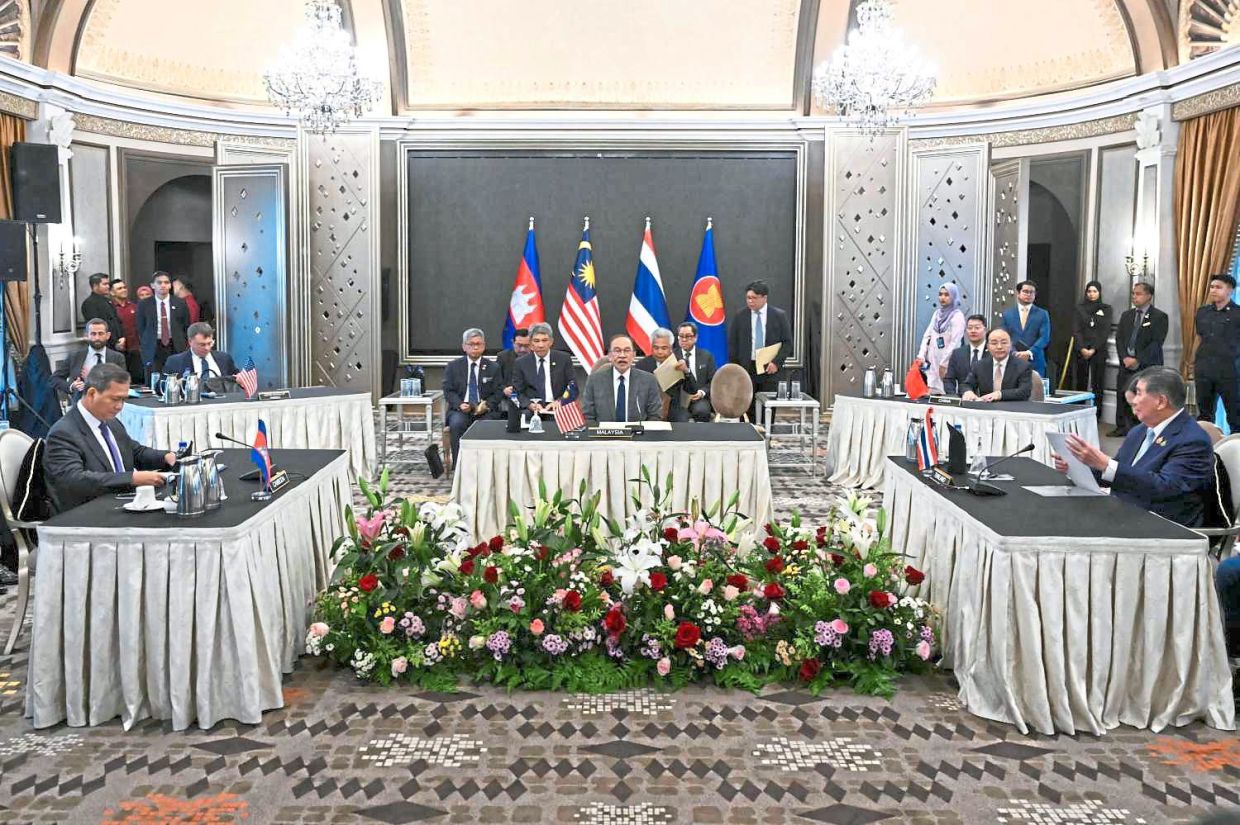
Acting in its capacity as Asean Chair, Malaysia hosted emergency talks in Kuala Lumpur and secured an agreement that halted further escalation – opening the door to demilitarisation efforts monitored by Asean observers.
The deal was welcomed across the region, with leaders and rights groups hailing it as a timely reminder of Asean’s capacity for dialogue when given the right platform.
It was a rare moment of success and one that bore the hallmarks of Malaysia’s diplomatic style: pragmatic and anchored in trust.
Middle power
Malaysia has long been regarded as a voice of reason by its neighbours, or at least as a country ready to extend the proverbial olive branch, says Special Adviser to the Foreign Minister Datuk Ahmad Azam Ab Rahman, who oversees humanitarian and reconstruction efforts in countries in need of aid.
From harbouring Vietnamese refugees in 1975 on Pulau Bidong to resolving the Mindanao conflict in the Philippines over the past decade, Malaysia has always been geographically and politically entrenched in regional affairs, Ahmad Azam says.
“We are in the heart of Asean. We are in the middle, encompassing and connected to everything. We take the middle path to maintain peace and stability. We always strive for the greater good.
“In many ways, due to Malaysia’s multicultural composition, we tend to look at things from a different perspective when it comes to resolving disputes, especially when promoting a shared future,” he says when met at the Kuala Lumpur Peace Conference 2025, organised by local think tank Iman Research recently.
Drawing from Malaysia’s previous involvement as a peace broker, Ahmad Azam says this approach is not just moral but also strategic.
“We need to be balanced in our approach – to understand the sentiments and needs of various parties. Instinctively and politically, it is also for our survival. This approach has landed us in a position to be the best bet when it comes to championing global justice.”
So what makes Malaysia effective in this role?
Universiti Teknologi Mara senior lecturer in administrative science and policy studies Dr Mohd Ramlan Mohd Arshad says Malaysia’s fundamental philosophy of neutrality and non-alignment – strengthened by the Asean declaration of the Zone of Peace, Freedom and Neutrality and its active Asean membership – has made it an honest mediator with clear strategic goals.
“This attitude was aided by a realistic and low-key approach to diplomacy, as shown by its effective role in bringing about the 1996 peace deal between the Philippine government and the Moro National Liberation Front.”
He adds that Malaysia’s diverse Muslim-majority culture also enhances its regional role.
“Malaysia is respected throughout the Islamic world and maintains strong, practical relationships with the West and China. The stature of its Foreign Ministry and the personal credibility of its leaders have given mediation efforts a professional foundation.”
In practice, Mohd Ramlan says Malaysia’s success lies in forbearance and patience, and cultivating trust through discreet, sustained backchannel negotiations involving neutral, respected figures.
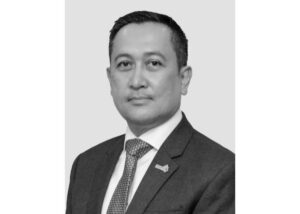
 Mohd Ramlan: Malaysia’s diverse Muslim-majority culture also enhances its regional role. — Photo provided
“Inclusive, multi-track diplomacy is essential – engaging not only political elites but also civil society, religious leaders and former combatants.
“This builds a foundation that can withstand political disruptions. Cultural and religious literacy are critical – without understanding context, external mediators often fail. Malaysia’s cultural affinity and its mediators’ ability to navigate an intricate social fabric were key in the Mindanao peace process, where legitimacy mattered more than legality.”
ALSO READ: Soft power in action
Balancing act
But with rising geopolitical tensions in the South China Sea and shifting alliances in Asean, can Malaysia balance its peacebuilding ambitions with the strategic interests of major powers like China and the United States?
Mohd Ramlan believes it can – by sticking to its guiding foreign policy principle of “pragmatic neutrality”.
“This does not mean doing nothing. It means involving all powers in multilateral frameworks like Asean and using Malaysia’s institutional credibility to guide conversations and reach agreements on neutral ground.
“Our policy must be one of issue-based alignment – working together on specific peace and security projects that benefit everyone, such as humanitarian relief or combating piracy.”
He adds that Malaysia’s strong trade ties with both China and the US can be leveraged to maintain regional stability.
“Malaysia can handle these rivalries without losing credibility as a mediator by portraying its efforts not as a threat to anyone’s strategy, but as a public good that benefits trade and security for all.”
Ahmad Azam agrees, saying both powers understand and respect Malaysia’s position as a regional middle ground.
“China has been Malaysia’s largest trading partner for decades. Remember earlier this year, when President Xi Jinping spent three days here? The time he spent here showed the consideration China has for us.”
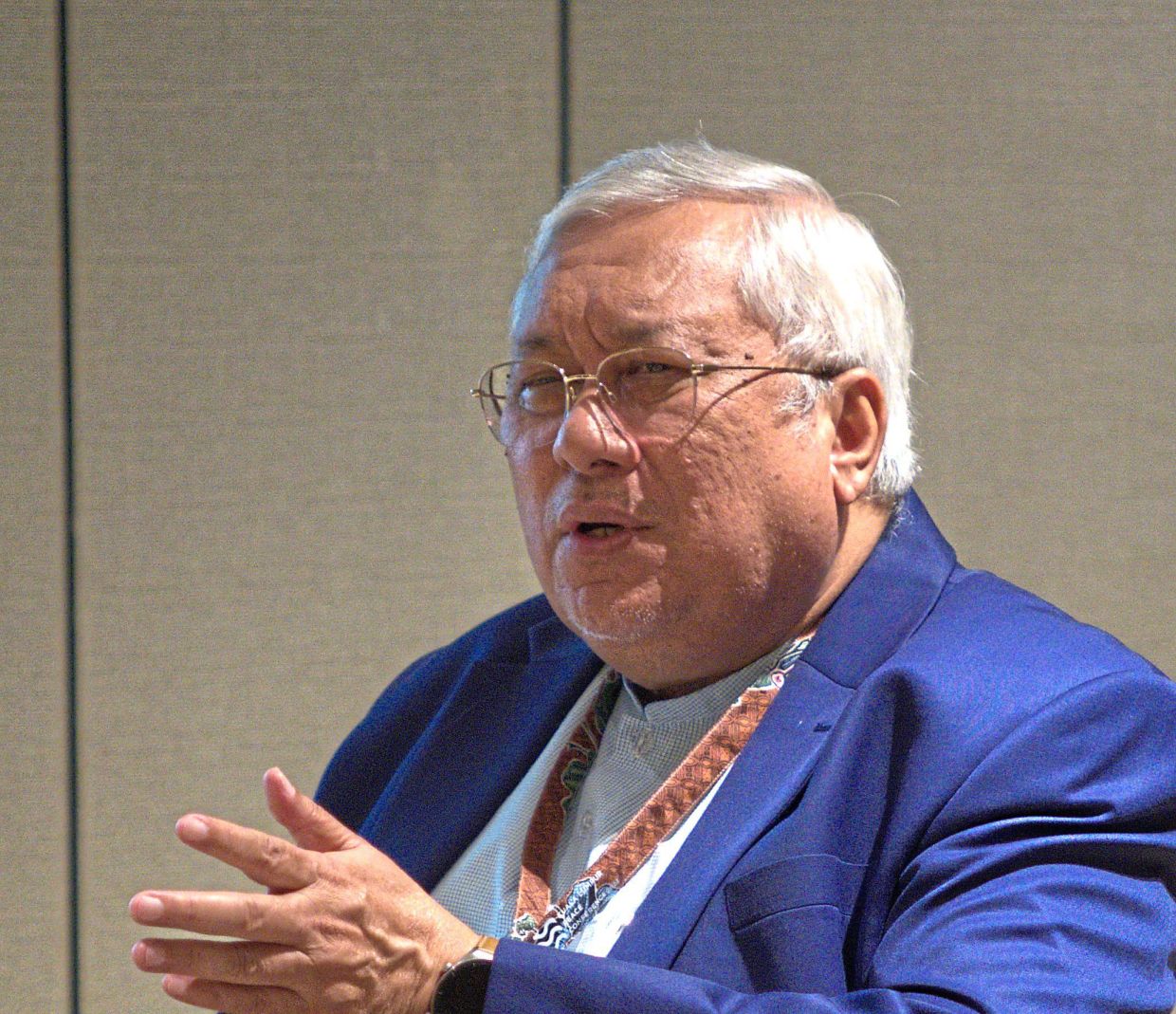 Ahmad Azam: We take the middle path to maintain peace and stability.— AK Communications
He notes that the same recognition applies to the US, with President Donald Trump set to attend the Asean Summit in Kuala Lumpur from Oct 26 to 28 – making him only the third sitting US president to visit Malaysia after Lyndon B. Johnson in 1966 and Barack Obama in 2014.
“Trump is coming now because of Malaysia’s geopolitical position, with China exerting its influence in the South China Sea. Following our recent success in brokering a ceasefire between Thailand and Cambodia, the US recognises Malaysia’s potential as a peacemaker.”
Hurdles ahead
Still, domestic and geopolitical pressures threaten to test that role; Mohd Ramlan cautions that while the principles of neutrality and cultural diplomacy remain vital, their effectiveness is waning due to political divisions at home.
“The intensified Sino-US competition makes Malaysia’s neutral stance increasingly difficult to sustain and may undermine perceptions of impartiality in certain crises.
“The institutional knowledge of Wisma Putra remains, but it’s operating in a much narrower space due to these geopolitical influences and domestic political complications.”
He adds that contradictions in Malaysia’s refugee and migration policies also risk eroding its reputation as a peacebuilder.
“Our diplomatic stance on Myanmar’s Rohingya issue is weakened by internal policies that detain refugees and deny them access to work, legal status or education.
“Accusations of insincerity stemming from this mismatch between domestic practice and foreign advocacy cast doubt on our legitimacy as a mediator. Consistency and moral conviction are crucial – policy mismatches create strategic vulnerabilities.”
He warns that neglecting human security could ultimately backfire.
“This internal disparity undermines Malaysia’s peacebuilding credibility. To remain a trusted mediator, Malaysia must better align its international objectives with its domestic human security policies.
“A more humane refugee policy is both morally and strategically necessary to strengthen our diplomatic clout.”
Asean and beyond
At the upcoming Asean Summit, Malaysia is expected to cement its peacebuilding credentials by hosting the signing of a new peace deal, the Kuala Lumpur Accord, between Cambodia and Thailand, witnessed by Trump and other leaders.
Ahmad Azam says Malaysia will continue championing Asean’s vision of shared values, mutual respect and peaceful resolution of differences – leading, ultimately, to shared economic prosperity.
“That’s what we call peace dividends – the growth of economic cooperation among Asean members. We are promoting a vision of shared values and destiny.
“If we work hard enough, we won’t have to wait 20 years to see it.”
Looking forward, Mohd Ramlan suggests institutionalising Malaysia’s mediation expertise.
“We should establish a national institute – perhaps affiliated with Wisma Putra or a university – to standardise mediation knowledge based on our successful peace efforts.”
Such an institute, he says, could train diplomats and regional peers in backchannel negotiation, religious and cultural sensitivity, and climate-related conflict resolution.
“To close the credibility gap between foreign policy and refugee care, a human security desk is also necessary – one that coordinates Malaysia’s local and international responses to climate-induced displacement and irregular migration.”
He adds that Malaysia should develop an interagency framework connecting intelligence, environmental and economic early warning systems to diplomatic response mechanisms.
“This would allow faster, data-driven responses to emerging problems, particularly environmental ones.
“Malaysia could move from reactive mediation to proactive regional stability.
“It’s about investing in institutional depth and building collective, not just national, capacity to handle 21st-century transboundary challenges.”