KUALA LUMPUR: On the eve of 2025, Prime Minister Datuk Seri Anwar Ibrahim said Malaysia faced a formidable task of leading Southeast Asia into the new year as Chair of Asean.
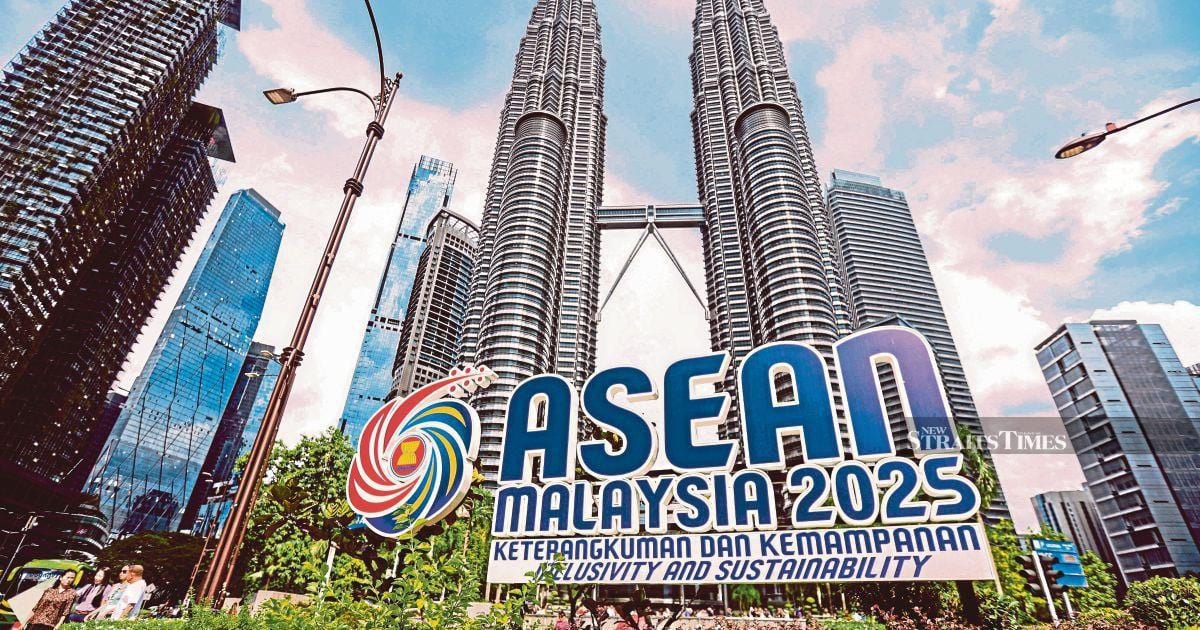
With ‘Inclusivity and Sustainability’ as the theme, the prime minister said the complexity of the global landscape would require Asean to chart new roles and directions.
“This is a significant responsibility for Malaysia, to unite the team and harness its strengths as one, ensuring that development remains sustainable,” he said in his New Year 2025 address.
As Malaysia concludes its chairmanship, the prime minister’s prediction has come to fruition. The country successfully steered the bloc through a turbulent year marked by regional tensions, global conflicts, and economic challenges. It hosted about 320 meetings nationwide and advanced initiatives across political-security, economic, and socio-cultural pillars.
Analysts said Malaysia’s chairmanship helped maintain a neutral, non-aligned stance on internal challenges, while preserving Asean’s central role in an increasingly complex global landscape.
The Kuala Lumpur Peace Accord, which temporarily eased Cambodia-Thailand border tensions against the backdrop of the conflicts in Ukraine and Gaza, reinforced Asean’s commitment to regional peace and stability.
Speaking to Bernama, Asean Secretary-General Dr Kao Kim Hourn said Malaysia’s chairmanship delivered commendable outcomes amid geopolitical volatility and economic uncertainty.
“Malaysia assumed the role during a truly turbulent period, when the world was grappling with the wars in Ukraine and Gaza, alongside economic uncertainties from US trade tariffs. It was not an easy environment for Asean to navigate, but through shared commitment and diligence, the region was able to weather these challenges,” he said.
Kao highlighted the Kuala Lumpur Peace Accord secured in October 2025 on the sidelines of the 47th Asean Summit and Timor-Leste’s accession to Asean as important milestones.
“Prime Minister Anwar‘s proactive ‘telephone diplomacy’ was vital in securing the necessary consensus from Asean leaders to agree to the ceasefire and subsequently sign the Kuala Lumpur Peace Accord,” he said, acknowledging the risk of collapse after the conflict took another violent turn this month.
On the economic front, Kao said Asean recorded encouraging progress, including the signing of the ATIGA Upgrade and the ACFTA 3.0 Upgrade Protocol.
Geostrategist Prof Dr Azmi Hassan said Malaysia strengthened Asean’s centrality by maintaining neutrality amid external pressures, including in addressing the situation in Gaza.
“Malaysia is also involved in the context of the Global South, BRICS, and the G20. In addressing these external issues within Asean, we are not taking sides but maintaining a neutral stance, which is the most significant contribution of our chairmanship,” he told Bernama.
Universiti Utara Malaysia’s Associate Prof Dr Siti Darwinda Mohamed Pero said Malaysia stood out not only for its diplomatic achievements, but also for the “quiet confidence” that guided Asean through an unusually complex year.
“Malaysia balanced high-stakes geopolitics with genuine efforts to advance regional initiatives, particularly through strategic discussions on regional autonomy grounded in Asean centrality, alongside collective commitments on climate resilience. Its chairmanship reminded observers that Asean’s strength lies not in choosing sides but in creating space for dialogue, peace, and a shared regional future,” she said.
Siti Darwinda added that Kuala Lumpur’s chairmanship also reached a milestone with Timor-Leste’s accession as Asean’s 11th member, symbolising the bloc’s willingness to grow and include a young nation in its regional family.
Malaysia hosted around 320 Asean meetings in 2025, covering the Political-Security, Economic, and Socio-Cultural pillars. The capital Kuala Lumpur hosted the 46th and 47th Asean Summits, while Langkawi and Penang hosted over 50 and 30 meetings respectively.
Among the notable special summits were the inaugural Asean-Gulf Cooperation Council (GCC)-China Summit and the Asean-GCC Summit in May, marking milestones in Asean’s external relations. Malaysia also hosted dialogue partner summits with Australia, China, India, Japan, South Korea, Russia, and the United States.
Functional summits included the Fifth Regional Comprehensive Economic Partnership (RCEP) Summit on trade and economic cooperation and the Third Asia Zero Emission Community (AZEC) Leaders’ Meeting on energy transition and sustainability.
On Jan 1, 2026, the Philippines takes over as the next Asean Chair.
Summing up Malaysia’s chairmanship, Philippine President Ferdinand R. Marcos Jr commended Anwar‘s leadership, describing it as “a very full agenda” that reflected Kuala Lumpur’s proactive role in guiding the bloc through global challenges.
“He (Anwar) was able to complete most, if not all, of what he had planned… He kept us all busy,” Marcos said.
–Bernama
© New Straits Times Press (M) Bhd