KUALA LUMPUR: Pengurusan Aset Air Bhd (PAAB) continues to attract strong bond interest despite carrying RM20 billion-RM22 billion in debt, supported by its government-backed, long-term funding model that aids water operators during their early years.
PAAB chief executive officer Ir. Zulkiflee Omar said investor confidence stems from the company’s 45-year revenue certainty and status as a wholly-owned entity of the Finance Ministry.
“With income guaranteed over the next 45 years, the market views us as low risk when we raise funds, supported by our parent, the Finance Ministry, and stable long-term revenue,” he said during a media forum organised by PAAB in collaboration with the Malaysian Press Institute (MPI) today.
Zulkiflee said PAAB’s low-risk profile has enabled the company to issue bonds and sukuk at highly competitive rates, with all issuances carrying a AAA rating and consistently oversubscribed.
He added that investors trust PAAB for its financial discipline and punctuality in payments, making it critical for the company to maintain its reputation as a reliable paymaster.
He noted that the company’s ability to raise low-cost funding allows it to lend to water operators at lower rates, easing financial pressure during the early years of the 45-year lease period.
“In the early years, we effectively subsidise operators through low lease rentals to help them survive. Only a government-owned entity like PAAB can support such a long 45-year structure,” he said.
Zulkiflee also highlighted that the lease structure is designed to give water operators sufficient time to achieve financial sustainability, supported by timely water tariff reviews every three years as stipulated under the agreements.
“We hope that within 15-20 years, supported by these tariff reviews, water operators will become financially sustainable. That is why we believe our business model is both financially sustainable and technically viable,” he noted.
PAAB’s asset base currently stands at about RM34 billion and is expected to grow to around RM40 billion as new assets are added, providing strong backing for its debt.
“Our total debt is about RM20 billion-RM22 billion, but it is supported by these assets and long-term income,” he said.
On bond redemptions, Zulkiflee said PAAB typically redeems a few hundred million annually, rarely exceeding RM1 billion in any given year, and has consistently met its obligations.
He explained that the company carefully plans its redemptions and raises sukuk not only for refinancing but also to meet new funding requirements.
He added that all of PAAB’s current bondholders are local institutional investors, including the Employees Provident Fund (EPF), although the company aims to attract foreign investors in the longer term.
Zulkiflee also said Selangor and Johor remain PAAB’s largest contributors due to rapid urbanisation and aggressive infrastructure planning.
“Collectively, payments from these states are sufficient to cover our operating costs, which is why PAAB continues to record reasonable profits,” he said.
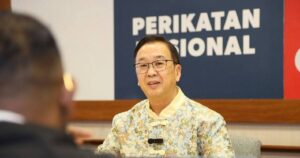
The forum aimed to enhance media understanding of PAAB’s role in the national water industry and address misconceptions that have persisted despite nearly two decades of operations largely behind the scenes.
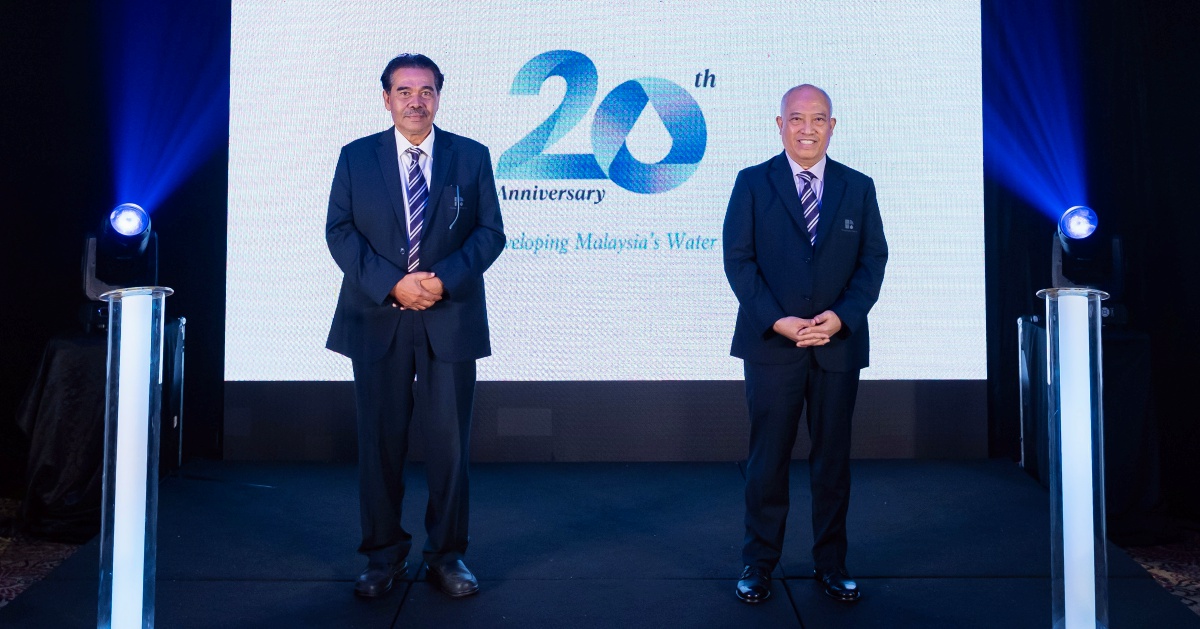
In conjunction with the event, PAAB unveiled its 20th anniversary logo, marking its approach to two decades since establishment and the upcoming celebration on May 5.
Established in 2006 under the Water Services Industry Act, PAAB was created as part of the federal government’s water industry reform agenda to tackle chronic challenges, including under-investment, ageing infrastructure, financial constraints among water operators and fragmented governance across states.
Under this reform, 10 state water operators signed the Water Services Industry Restructuring Agreement, transferring water supply authority from state governments to the federal government.
The agreement also facilitated the settlement of RM7.6 billion in outstanding state debts in 2005 and addressed long-term industry challenges, such as cash flow pressures, underpriced tariffs and a projected RM110 billion funding requirement over 50 years to ensure sustainability and full cost recovery.
PAAB’s mandate is to develop and finance water infrastructure across Peninsular Malaysia.
These assets, including water treatment plants, reservoirs, and pipelines, are leased to state water operators under long-term arrangements, while operators remain responsible for treating and distributing water to consumers.
To date, PAAB has invested RM22.44 billion in national water infrastructure development, covering completed projects, ongoing initiatives and future projects at planning and design stages, reflecting its long-term commitment to strengthening the country’s water ecosystem.
Looking ahead, PAAB is focused on increasing treated water reserve margins, reducing non-revenue water (NRW) losses, strengthening system resilience and supporting sustainable water services nationwide.
The transformation of Malaysia’s water sector follows a four-phase approach.
The Migration Phase (2008-2020) focused on asset-light operations and limited financial sustainability.
The Stabilisation Phase (2021-2030) emphasises infrastructure investment, increasing reserve capacity, reducing NRW, improving service quality and reviewing tariffs.
The Consolidation Phase (2031-2040) aims for cost-efficient operations, optimising resources, further reducing NRW and building reserves through internal funding.
The Full-Cost Recovery Phase (2041–2050) will establish appropriate tariffs, fund all investments internally, create a bankable entity and ensure guaranteed service quality.
PAAB said current initiatives to support sustainable water infrastructure include maintaining treated water reserve margins, reducing non-revenue water, managing residues from treatment plants, and recycling industrial and sewerage wastewater.
Future plans include harvesting rainwater and desalinating seawater to further enhance water sustainability.
© New Straits Times Press (M) Bhd