
IPOH: The Ministry of Housing and Local Government (KPKT) has given state governments six months to engage in discussions aimed at forging strategic cooperation to enforce the Solid Waste and Public Cleansing Management Act 2007 (Act 672).
Its minister, Nga Kor Ming, said the discussions would target states that have yet to adopt the Act, as part of efforts to tackle littering in public areas.
He expressed optimism that penalties under Act 672 — fines ranging from RM2,000 to RM10,000 and up to 12 hours of community service — would be welcomed by states that have not yet enforced it.
Nga said the Act was passed unanimously by parliament and had received royal assent from the Yang di-Pertuan Agong.
“We are giving six months to hold discussions with state governments, including Perak, to explore ways to establish strategic cooperation.
“This is because the penalties were unanimously approved by parliament and consented to by the Yang di-Pertuan Agong. As such, Act 672 carries the endorsement of all levels of society,” he told reporters after the KPKT Minister’s Sentuhan Kasih official working visit to the Bercham state constituency here today.
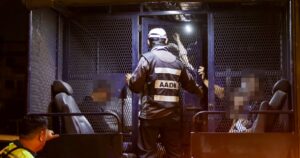
Yesterday, it was reported that 42 individuals, including two children, became the first group to be investigated under Act 672 for littering in public areas.
They were issued Notices of Offence (NPK) during an enforcement operation by the Solid Waste and Public Cleansing Management Corporation (SWCorp) held in conjunction with New Year 2026 eve celebrations in the capital.
As of May 2025, five states — Selangor, Penang, Perak, Terengganu and Kelantan — have yet to adopt Act 672.
Elaborating further, Nga, who is also the Teluk Intan member of parliament, said all 42 individuals, including 18 foreigners, were detained around the Bukit Bintang area in Kuala Lumpur.
He said compounds had been issued to all of them, whom he described as “litterbugs”.
He added that the cases would also be referred to the Attorney-General’s Chambers (A-GC) to determine whether the offenders would face court prosecution.
Meanwhile, at a separate media briefing during his visit, Nga said community service penalties, such as street sweeping, drain cleaning and cleaning public toilets, could only be carried out after offenders had completed the court process.
© New Straits Times Press (M) Bhd