
GLOBAL investors are increasing their wagers on Chinese artificial intelligence companies, betting on the next DeepSeek and seeking to diversify, with concerns growing about a speculative bubble in the sector on Wall Street.
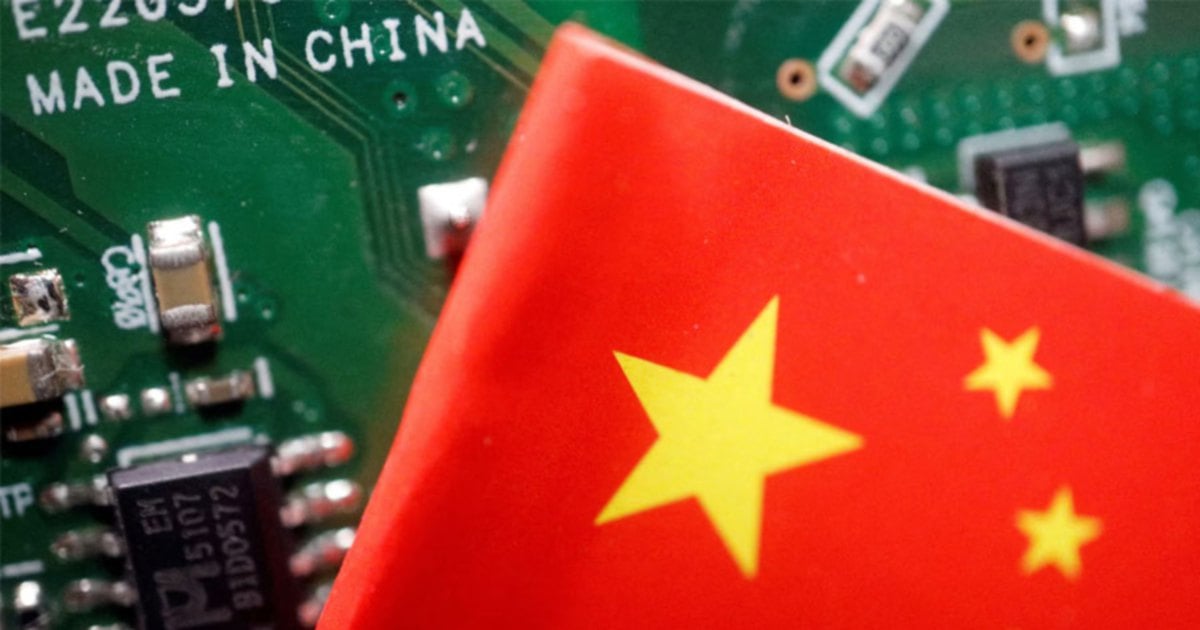
Demand for China‘s AI companies is also being stimulated by Beijing’s push for tech independence. China has fast-tracked blockbuster listings of chipmakers, notably Moore Threads, dubbed “China‘s Nvidia”, and MetaX — both debuted this month.
Foreigners see China closing the tech gap with the United States as Beijing steps up support for AI chipmakers, spurring bets on Chinese companies just as worries grow over lofty valuations on US-listed AI stocks.
United Kingdom-based asset manager Ruffer, for example, said it has “deliberately limited exposure” to the Magnificent Seven — the US tech giants — and is looking to add positions in
Alibaba for a bigger exposure to China’s AI theme.
“While the US remains the leader in frontier AI, China is rapidly narrowing the gap,” said Gemma Cairns-Smith, investment specialist at Ruffer.
“The moat may not be as wide, or as deep, as many think … The competitive landscape is shifting.”
Ruffer is gaining exposure to the AI theme through Chinese tech giants such as Alibaba, which operates an AI chip unit, owns large language model Qwen, and is ploughing money into cloud infrastructure.
Global asset managers are increasingly eyeing Chinese AI firms as a wave of startups lists on the mainland and in Hong Kong, seeking to tap into surging investor appetite following the meteoric rise of DeepSeek, China’s answer to ChatGPT.
UBS Global Wealth Management in a report this month rated China tech as “most attractive”, citing investors’ search for geographical diversification and China’s “strong policy backing, technological self-reliance, and rapid AI monetisation”.
The tech-heavy Nasdaq currently trades at 31 times earnings, compared with a multiple of 24 for Hong Kong’s Hang Seng Tech, which enables AI bets via stocks including Alibaba, Baidu, Tencent and chip foundry SMIC.
Riding the momentum, US investment adviser Rayliant helped launch a Nasdaq-listed fund in Sep-tember that gives investors access to “China’s versions of stocks like Google, Meta, Tesla, Apple, and OpenAI.”
KraneShares Chief Investment Officer Brendan Ahern said the rapid ascent of Chinese AI chipmakers such as Cambricon speaks to the scale and speed of innovation across China’s AI and semiconductor industries.
“The element of this race narrative, this urgency, is to the benefit of the companies,” he said, referring to the bitter Sino-US tech war.
“It’s like yelling fire, right? When you make it an emergency, you get a lot of attention.”
KraneShares’ exchange-traded fund dubbed KWEB, which invests in offshore-listed Chinese stocks including Tencent, Alibaba and Baidu, has jumped by two-thirds this year to nearly US$9 billion.
Another KraneShares ETF that invests in China’s onshore tech stocks, including chipmakers Cambricon, Montage Technology and Advanced Micro-Fabrication Equipment , has also grown this year.
In the AI race, the US has an edge in innovation while China has advantages in engineering, manufacturing and power supply, said Jason Hsu, founder of US-based Rayliant Global Advisors.
Rayliant has partnered with China Asset Management Co in launching a Nasdaq-listed ETF that bets on Chinese stocks with transformative technologies, including Cambricon.
US tech curbs have “now forced China to pump money into hard technology and invent from scratch”, said Hsu.
Chinese AI chipmaker MetaX Integrated Circuits, founded by former AMD executives, jumped 700 per cent in its Shanghai market debut last week, days after larger rival Moore Threads debuted with a 400 per cent pop.
Kamil Dimmich, partner and portfolio manager at UK-based North of South Capital, fund owns stocks such as Alibaba and Baidu, which have both invested much less than US players on AI development.
Carol Fong, group chief executive officer of CGS International Securities, said investors should selectively add companies that have benefited from China’s “self-reliance” push in the AI and semiconductor sectors, while keeping global leaders in their portfolio.
There is a hunt for “potential leaders in the high-tech segments such as robotics and AI, where they see clearer policy directions and relative value as compared to the Western counterparts,” Fong said.
“Investors should “balance exposure in the current fragmented, geopolitics-driven chip cycle”, she said.
* The writers are from Reuters
© New Straits Times Press (M) Bhd