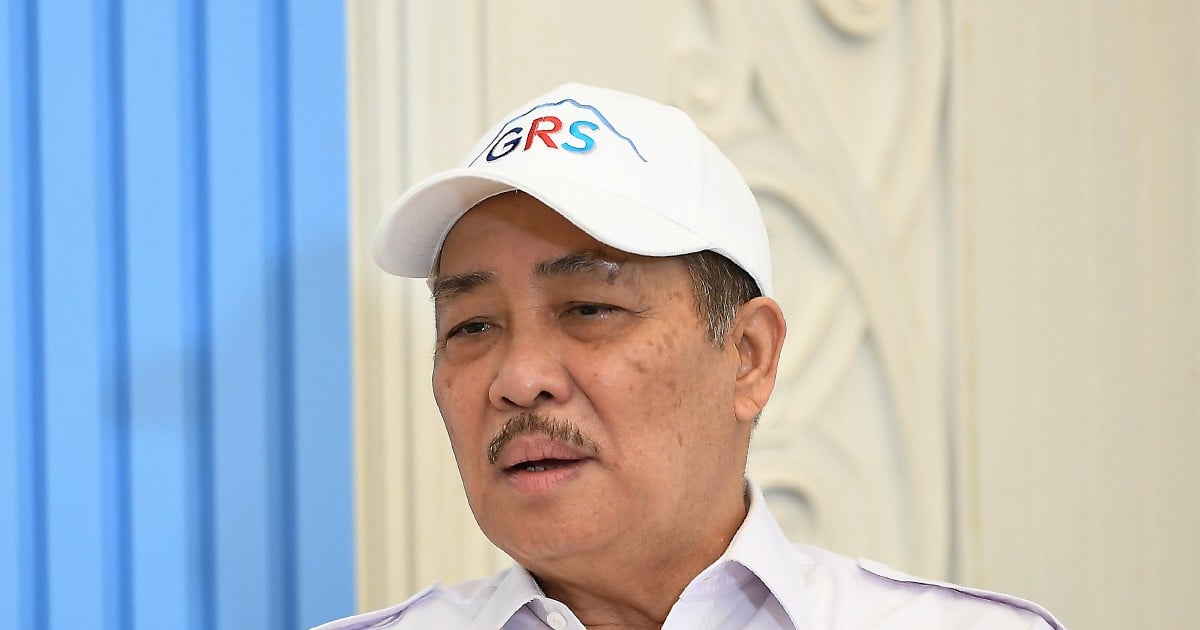
KOTA KINABALU: Sabah has continued to strengthen its economic position and investment performance over the past five years, with sectors such as solar, oil and gas, and electric-vehicle battery components showing sustained growth.
Chief Minister Datuk Seri Hajiji Noor said foreign investment in Sabah from 2021 to 2024 amounted to RM14.77 billion, while domestic investment over the same period totalled RM20.61 billion.
For the first half of 2025 alone, he said Sabah secured RM6.61 billion in foreign investment and RM4.79 billion in domestic investment.
Hajiji said the investor-friendly policies adopted by the Sabah government had created a strong foundation for attracting high-value investments, including from South Korea and China, which have opened facilities such as a copper foil plant at the Kota Kinabalu Industrial Park and a solar panel glass manufacturing and sand-processing plant.
“Sabah has received tens of billions in investments, both domestic and foreign, and these investments are now operational. When we adopt investor-friendly policies, many investors are encouraged to come here,” he told Bernama in an exclusive interview.
Hajiji said Sabah had also recently secured a major investment from Singapore at the Oil and Gas Industrial Park (OGIP) in Sipitang, with the agreement signed and witnessed by Prime Minister Datuk Seri Anwar Ibrahim.
“This investor from Singapore is bringing RM31 billion in investment across three phases. Not only will this strengthen the economy, but it will also create many job opportunities.
“I understand that during implementation, they will require 7,000 to 8,000 workers, which will provide excellent opportunities for Sabah’s young people,” he said.
He added that domestic investments from companies based in Peninsular Malaysia, Sarawak and Sabah had also contributed significantly to the state’s strong investment performance.
“The government’s support for investors has been substantial, and Sabah’s sound policies make investors confident about coming here.
“The state government provides key facilitation such as land, sites and regulatory support to expedite approvals so investors can begin operations swiftly,” he said.
On state revenue, Hajiji said Sabah had increased its collections to RM7 billion, up from RM3 billion when he first assumed office.
“State reserves have also increased to RM8 billion, compared with less than RM3 billion when I first took over the administration,” he said.
© New Straits Times Press (M) Bhd