
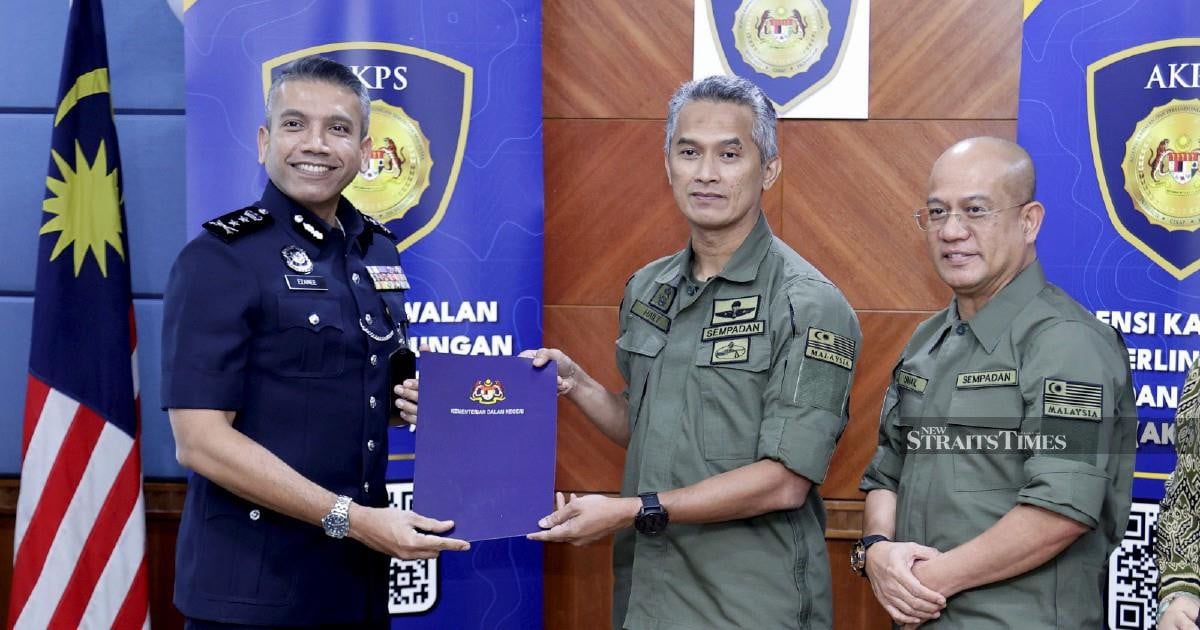
PUTRAJAYA: Datuk Seri Mohd Shuhaily Mohd Zain has outlined clear expectations for the three newly appointed Malaysia Border Control and Protection Agency (MCBA) commanders, emphasising practical, ground-level leadership to manage Malaysia’s most complex border entry points.
The three commanders who received their appointment letters were Kuala Lumpur International Airport MCBA commander Mohd Safrie Zakaria, Port Klang MCBA commander Datuk Nik Ezanee Mohd Faisal and Kuantan Port MCBA commander Farah Azura Mohd Shargawi.
Shuhaily said the appointment of Mohd Safrie reflected the need for diplomatic and administrative expertise, particularly in dealing with passengers, airlines and multiple stakeholders.
“KLIA is about receiving people. You need someone who is diplomatic, administrative and able to manage interactions with passengers and stakeholders at the entry point,” he told reporters after handing over appointment letters to the three commanders here today.
For Kuantan Port, Customs expertise was prioritised to manage cargo and customs-related operations, while Port Klang, described as the “pulse” or backbone of the country’s import-export ecosystem, required leadership with strong enforcement experience.
“Port Klang is vast. You have multiple port operators and constant pressure.
“The risks are real and continuous,” he said.
Shuhaily said Nik Ezanee’s past experience in Selangor police and the corporate sector would be crucial in consolidating cooperation between agencies and private operators.
“I hope the networks he built previously can now be optimised at Port Klang,” he said.
Despite manpower shortages, Shuhaily said that commanders must not remain desk-bound.
“They must get their hands dirty. Sitting in offices alone will not help identify the problems faced by officers on the ground,” he said.
He added that commanders must be pragmatic, especially during the transition period when border processes change and public behaviour needs to be managed.
“For example, when people are used to not queuing, and suddenly we introduce new procedures, that creates tension.
“Leadership is about handling that interaction while fixing weaknesses below,” he said.
© New Straits Times Press (M) Bhd