KUANTAN: The Kuala Gandah National Elephant Conservation Centre (PKGK) in Lanchang, Temerloh, has relocated five wild elephants captured in Kampung Pianggu, Rompin, during a three-day operation starting Jan 18.
The operation was conducted by the Pahang Wildlife and National Parks Department (Perhilitan) Elephant Capture Unit.
PKGK Kuala Gandah head Che Ku Mohd Zamzuri Chik Wan Ab Rahman said three of the elephants, including a five-month-old calf, were sent to the centre between late Tuesday and yesterday for medical treatment.
Two others will be released directly into their original habitat tomorrow.
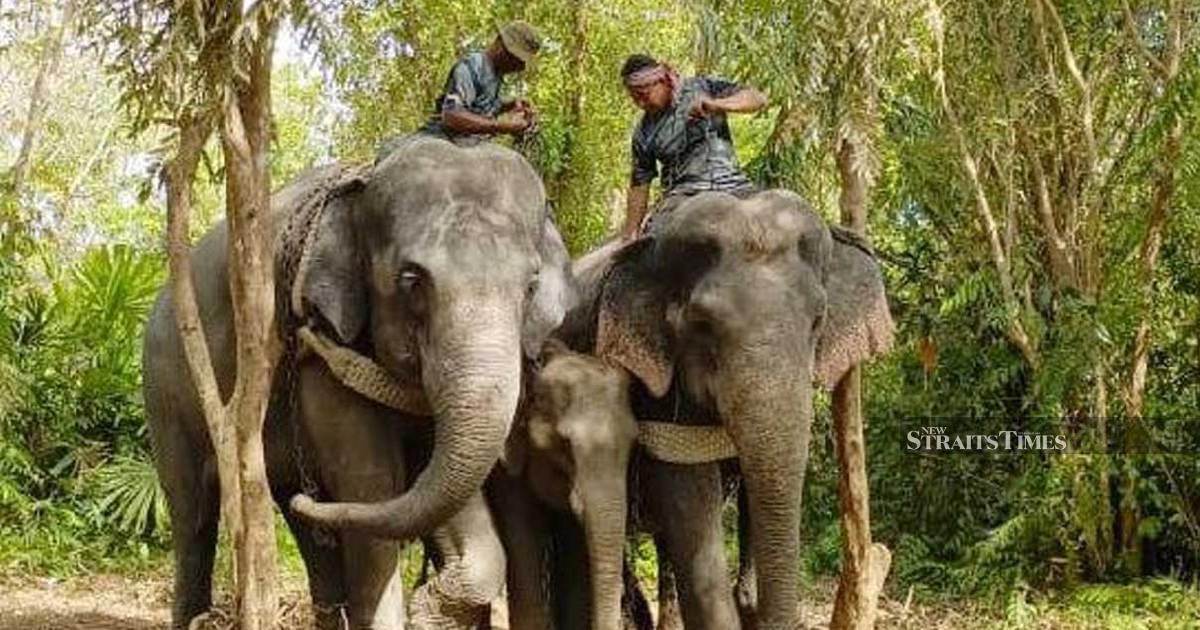
“Decoy elephants Kasturi and Abot will be used to facilitate the relocation, which is the first of its year in Pahang,” he said here today.
Che Ku Mohd Zamzuri said the female calf had tested positive for Elephant Endotheliotropic Herpesvirus (EEHV) and required immediate treatment.
Another elephant relocated yesterday sustained injuries to its front leg and is being treated to prevent the wound from worsening.
He said morphological measurements were recorded and microchips were installed for both elephants, adding that while their condition is stable, they require monitoring.
The five elephants captured were part of a larger group of 20 to 25 animals seen foraging across forest areas in Pahang and Johor.
The operation involved 11 PKGK personnel assisted by eight members from the Pahang Perhilitan Elephant Capture Unit and the Rompin Perhilitan office.
Che Ku Mohd Zamzuri said the wild elephants had to be led between 250m and 500m through local oil palm plantations to reach the transport trucks.
He added that 313 wild elephants have been relocated across six states in the peninsula over the last five years.
Kelantan recorded the highest number at 104, followed by Perak (77), Pahang (58), Johor (43), Kedah (21), and Terengganu (10).
“Large-scale deforestation remains the primary factor driving the animals into plantations, orchards, and settlements near forest fringes,” he said.
© New Straits Times Press (M) Bhd