
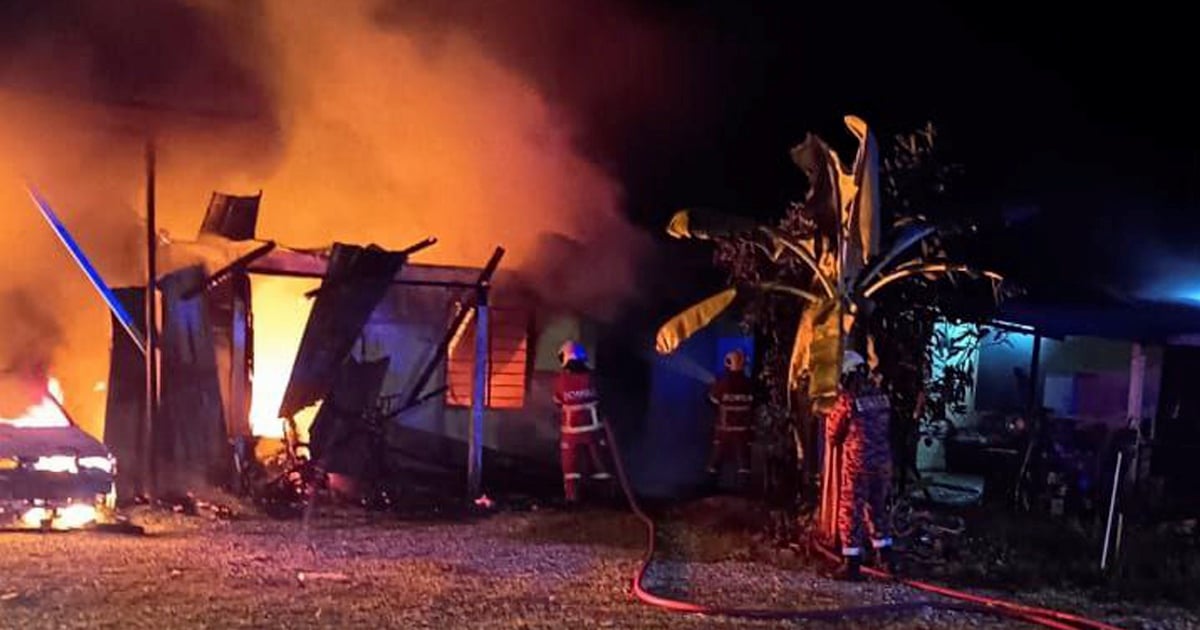
Recently a family of five died in Raub following a fire that gutted their home.
Fire is an essential part of our daily lives. We depend on it in our homes, factories, and businesses, especially in manufacturing and industrial processes.
We cannot avoid using fire, nor can we afford not to. Yet, while fire supports modern living, it also brings serious risks when not properly managed.
According to the 2025 Annual Report of Jabatan Bomba dan Penyelamat Malaysia, 16,111 fire cases were recorded, of which 76 per cent were structural fires, resulting in 98 deaths and RM2.09 billion in property losses, with 55.4 per cent of fatalities occurring in residential homes.
Between 2018 and 2024, Malaysia recorded an average of approximately 111 fire-related deaths annually, with most incidents occurring in residential buildings.
While industrial fires often lead to significant financial losses, domestic fires remain the primary site of human tragedy.
Sabah recorded the highest number of fatalities at 21 deaths, frequently linked to high-density settlements and limited emergency access.
Forensic analysis shows that most domestic fire fatalities are not caused by flames but by smoke inhalation and delayed detection, particularly in older, poorly maintained terrace houses without basic smoke alarms, where occupants are often incapacitated before realising a fire has started.
Many incidents are classified as accidental fires, commonly associated with the 3L Syndrome — LUPA (forgetfulness), LALAI (negligence), and LEKA (complacency) — as often emphasised by Datu Khirudin Drahman, former Fire Safety Division Director in Putrajaya and Honorary Advisor to Alliance For A Safe Community.
After every tragedy, communities question why it happened, yet fire safety is a shared responsibility among five critical parties: authorities, designers, builders, inspectors, and occupiers, each of whom must diligently perform their roles.
In line with this shared responsibility, the Fire and Rescue Department of Malaysia has introduced its Strategic Plan 2026–2030, aligned with the National Fire Policy 2021–2030 and the 13th Malaysia Plan, marking a shift from response-based safety measured by response time to a prevention-focused approach centred on community resilience and “humanising safety,” where citizens become the first responders.
Community-driven initiatives are vital and demonstrate how creating local champions can strengthen neighbourhood preparedness.
By addressing the 3L Syndrome and cultivating a 3P Culture as a shield of safety, households can adopt simple yet life-saving practices such as conducting a 10-minute night walk to check appliances and gas stoves, adopting a One Home, One Extinguisher rule, practising EDITH (Exit Drills in the Home) to ensure family members can escape within seconds, enforcing a zero-obstruction policy to keep exit routes clear, reducing clutter, and carrying out regular maintenance of electrical and mechanical equipment.
The first five minutes of a fire are more critical than the next five hours, and fire safety in 2026 is no longer merely about the arrival of the red fire truck but about building community champions and fostering collective responsibility.
By eliminating forgetfulness, negligence, and complacency and embracing proactive safety habits, Malaysia can move closer to achieving the goal of zero fire deaths, ensuring a safer and more resilient future for all.
TAN SRI LEE LAM THYE
Chairman
Alliance For A Safe Community
© New Straits Times Press (M) Bhd