KUALA LUMPUR: The East Coast Economic Region Development Council (ECERDC) closed the ECER Master Plan 2.0 on a high after surpassing its eight-year investment targets.
The council said it recorded RM75 billion in committed investments and RM55 billion in realised investments, well above the initial goals set for the 2018–2025 period.
Under the eight-year plan, ECERDC exceeded its original targets of RM70 billion in committed investments and RM49 billion in realised investments, it said in a statement today.
The investments generated more than 79,000 jobs and over 25,000 entrepreneurship opportunities across Kelantan, Terengganu, Pahang, and the Johor districts of Mersing and Segamat, supporting income growth, industrial expansion and broader community participation.
The development period also coincided with a turnaround in population and migration trends in the East Coast.
After years of net out migration, the region recorded a migration inflow in 2024, supported by expanding employment opportunities, improved connectivity and the completion of key projects.
More than half of the migration involved intra state movement, indicating stronger local workforce retention.
In 2025 alone, ECERDC said it achieved RM10.01 billion in realised investments, meeting its annual target despite a challenging global economic environment.
These investments created about 5,300 jobs, reinforcing ECER’s contribution to balanced national growth.
Manufacturing remained the largest contributor to realised investments in 2025 at RM6.2 billion or 61.9 per cent of the total, followed by oil and gas at RM2.2 billion, tourism at RM1.1 billion, agriculture at RM471 million and services at RM37 million.
Pahang led regional investment growth with RM7.35 billion in realised investments, followed by Terengganu at RM1.41 billion, Kelantan at RM1.13 billion and Johor’s Mersing and Segamat districts at RM121 million.
Key projects that began to be realised during the year included a RM1.5 billion petrochemical plant in Pahang, a RM638.6 million pulverised quartz manufacturing facility in Terengganu and a RM1 billion, 84 megawatt mini hydro power project in Kelantan.
Operations also commenced at the RM91 million Jemaluang Dairy Valley in Johor, supporting national food security efforts.
Meanwhile, ECERDC said realised investments were supported by a pipeline of RM12.4 billion in committed investments, with manufacturing accounting for RM9.7 billion.
Renewable energy projects such as mini hydro, floating solar and large scale solar featured prominently, highlighting ECER’s growing role in Malaysia’s energy transition.
Several catalytic projects were also completed in 2025, including the Jemaluang Dairy Valley, Phase 1B of the Kerteh Biopolymer Park SME Complex, the road linking Kuala Terengganu Airport to the city centre and upgrading works at the Cherating Turtle Conservation and Information Centre.
Looking ahead, ECERDC will transition to the ECER Development Plan (EDP) 2026–2030, which will focus on high-value industries, food security, sustainable tourism, renewable energy and logistics connectivity.
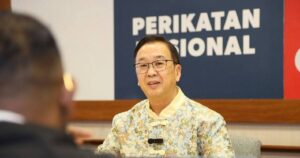
ECERDC chief executive officer Datuk Baidzawi Che Mat said the council has continued to make steady strides in developing the ECER, with progress across investment, infrastructure and employment initiatives.
He said this demonstrates that its strategies are translating into real outcomes for the rakyat.
“As we move into EDP 2026–2030, our focus will be on sustaining investment momentum while deepening development impact across the ECER.
“ECERDC remains committed to building a resilient, future-ready regional economy that generates long-term value for investors and lasting benefits for local communities,” he added.
© New Straits Times Press (M) Bhd