
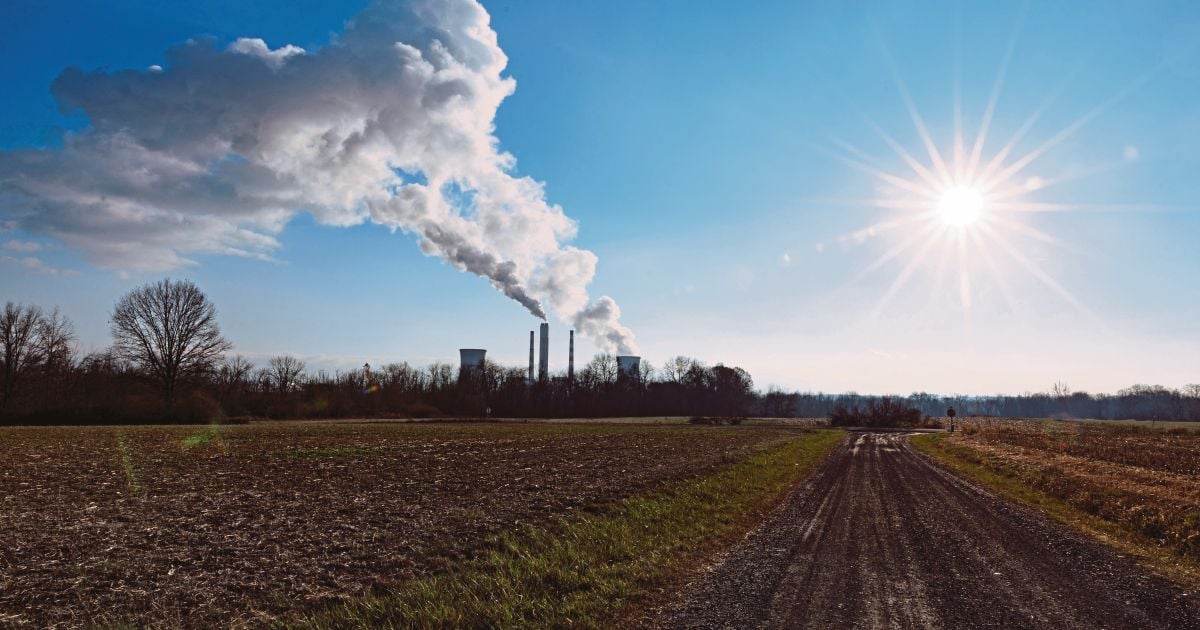
THE residents came in camouflage hats and red shirts signalling unity, more than 300 of them packing into a rural Pennsylvania planning commission meeting to protest a proposed data centre they feared would carve up their farmland and upend the quiet rhythms of their valley.
Most were loyal supporters of President Donald Trump, who carried their home of Montour County by 20 percentage points in the 2024 election.
But they bristled at Washington’s push to fast-track artificial intelligence infrastructure, which has driven data-centre growth in rural areas around the US where land is cheap.
Political leaders across the US are urging a rapid expansion of data-centre capacity and new power production to keep the country competitive in AI.
Trump, a Republican, is promoting the build-out as an economic and national security priority, and has directed his administration to bypass environmental rules that give local communities a voice.
In Pennsylvania, Democratic Governor Josh Shapiro and Republican Senator Dave McCormick are courting developers with incentives and infrastructure to attract investment in the fast-growing industry.
Some communities welcome the economic boost. But the backlash in Montour County, nestled in central Pennsylvania, reflects a growing coalition of farmers, environmentalists and homeowners who have united across partisan lines to resist data-centre expansion.
A report by Data Centre Watch earlier this year found that about US$64 billion worth of data centre projects have been blocked or delayed amid local pushback in states including Texas, Oregon and Tennessee.
Critics in Pennsylvania worry that their region could turn into northern Virginia’s “data centre alley”, with its vast, sprawling complexes.
If successful, the pushback threatens to slow efforts by the administration and the tech industry to build AI infrastructure fast enough to keep pace with global rivals.
Political strategists say anger over the projects also could add to the problems Republicans face as they grapple with affordability worries going into the 2026 midterm elections.
“It’s an issue that can be exploited by whoever’s out of power,” said Chris Borick, a political science professor at Muhlenberg College in Allentown, Pennsylvania.
The politics of AI infrastructure, he added, remain unsettled. Talen Energy is requesting to rezone roughly 526ha in Montour County from agricultural to industrial use, the first step towards building a large data centre that would include 12 to 15 buildings.
Residents worry that losing this land would weaken the local farm economy, including a nearby plant that processes soyabeans for regional food and feed.
Montour County Commissioner Rebecca Dressler, a Republican, said the concerns are rooted less in ideology than in preserving the region’s character.
Rather than blaming Trump, residents are pointing their fingers at the billion-dollar companies behind the data-centre boom — firms with money to snap up farmland, reshape rural landscapes and leave locals to absorb the higher utility costs.
“I think it’s a society that has forgotten about the small person — the people who live here, the farmers who are struggling with the economy,” said Theresa McCollum, a 70-year-old Trump supporter.
The shift in power to Washington does not sit well.
“Both (political) parties are pushing data centres and giving regulatory relief — water permits, permitting, all of it,” said another Trump supporter.
Pennsylvania’s abundant, stable electricity has made it a hot spot for data centres, attracting tens of billions in investments from Amazon.com, Alphabet’s Google, and Microsoft, with Constellation Energy even eying the old Three Mile Island nuclear power plant to power new server farms.
But residents fear they may end up paying for it.
Electricity prices in Pennsylvania increased by about 15 per cent in the past year — roughly double the national average, according to federal data. That surge is already rippling through the regional grid.
Analysts warn that customers’ bills could climb significantly in the years ahead. For many families, the strain is already visible.
Overdue utility balances have risen far faster than inflation since 2022, and Pennsylvania ranks among the states with the highest levels of household energy debt, according to the Century Foundation, a progressive research organisation.
Those pocketbook pressures are starting to reshape politics in some parts of the United States.
The writers are from Reuters
© New Straits Times Press (M) Bhd