“WALANG ganyan sa States (That doesn’t exist in the States),” repeatedly said the high-strung character in the notoriously hilarious Petron Ultron TV commercial in 2003.
From traffic congestion to pollution and patchy roads, the character repeatedly reminded her embarrassed driver of the chasm between conditions in her wretched homeland, the Philippines, and her adoptive paradise, the US.
Over the next two decades, as the “American dream” gave way to declinism, demagoguery, economic crises, and political polarisation, Filipinos found new paradises to juxtapose with their seemingly hopeless homeland.
A new generation of aspirational middle classes found in Singa-pore a new “gold standard” for governance: clean roads, efficient public transportation systems, meritocratically-selected leaders and world-class healthcare and educational institutions. What’s not to love?
The situation reached a critical juncture in the mid-2010s, as Benigno “Noynoy” Aquino III’s liberal reformism lost its lustre amid the visible inability of state institutions to respond to the material and political needs of a rapidly expanding middle class on the heels of a decade of rapid economic growth and democratic deepening. Most notoriously, former president Rodrigo Duterte’s diehard supporters portrayed Davao City – Duterte was mayor then – as the “Singapore of the Philippines”, and enthusiastically endorsed the “iron-fist” style leadership represented by Singapore’s founding father. Never mind that Lee Kuan Yew, a Cambridge-educated lawyer, never endorsed extrajudicial killings and was never remotely as uncouth as Davao’s mayor.
My Singaporean friends were always visibly annoyed (in honour of their leader) and embarrassed (for us Filipinos) when folks foolishly tried to compare Duterte with one of the great statesmen of the 20th century.
Tragically, in our desperation to become Singapore, we ended up with Dutertismo – a cynical “burn down the house” form of politics. We traded freedom for development, but ended up losing both, as Duterte oversaw an unprecedented era of brutality and mismanagement, most notably during the Covid-19 pandemic, when the Philippines suffered the most casualties and the deepest economic contraction in Asia.
Treating Dutertismo as a historical aberration, meanwhile, liberals and even some progressives indulged in their own version of fantastical boosterism. On one hand, some liberals insisted that Aquino’s presidency was unfairly underappreciated and tragically distorted by disinformation – and that his great legacy would have been sealed had former Senator Manuel “Mar” Roxas II succeeded him.
While not embracing the same form of denialism vis-à-vis the visible shortcomings of liberal reformism – namely the total absence of structural reforms addressing the root causes of corruption and uneven development – some prominent progressives began speaking of how the likes of former vice-president Leni Robredo would have been a shoo-in for the presidency had the Philippines been New Zealand or Norway. Well, it is not!
Following the “UniTeam” shellacking of liberal forces in the 2022 elections, an even more insidious form of cynicism began to set in: an upsurge of “Vietnam envy”, thanks to Hanoi’s remarkable transformation in the past decade alone, and panic over the Philip-pines being overtaken by Cambodia and Laos.
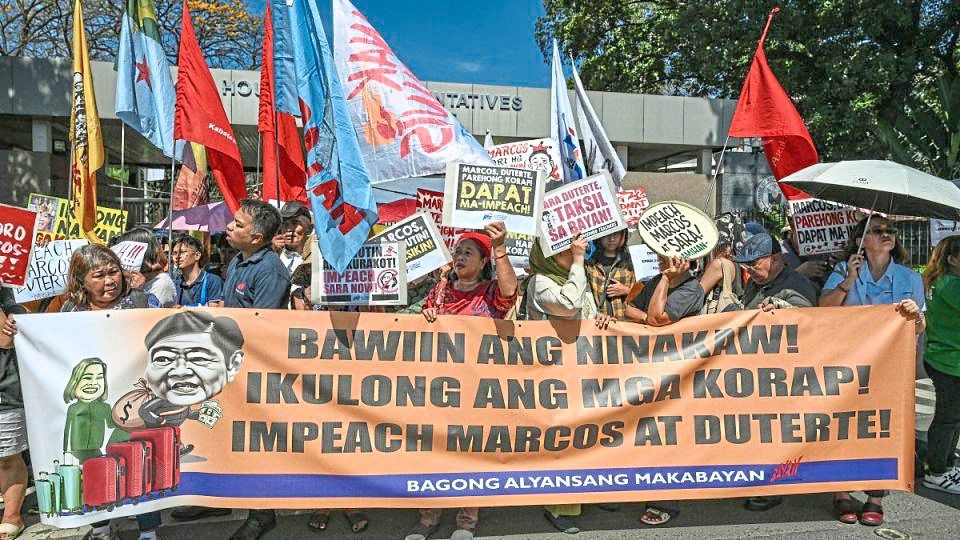
All three countries have authoritarian regimes! And amid the recent flood control corruption scandals and persistent public support for the Dutertes ahead of the 2028 elections, some liberal commentators are basically implying that the Philippines is utterly hopeless and – sans any evidence in global comparative terms – dismissing the country as a hopelessly corrupt nation that will soon succumb to a new era of low growth and democratic breakdown.
It’s precisely against this backdrop that we need a genuine “politics of hope”, which rejects self-orientalising and cynical mischaracterisations of the country, which actually happens to be average by all key global standards (eg, the State Capture Index, the State Capacity Index, Democracy Index, and even the Economic Competi-tiveness Index), as well as actively promotes a vision of inclusive development, good governance, and national excellence that gets the country to the rank of “first world nations” in the coming decades.
Obviously, politicians need to get real about the genuine problems facing the nation, but a patriotic leap of faith combined with a package of concrete policy solutions is a prerequisite for sustained nation-building. — Philippine Daily Inquirer/Asia News Network
Richard Heydarian is a Filipino political scientist, public thinker, and media personality.