
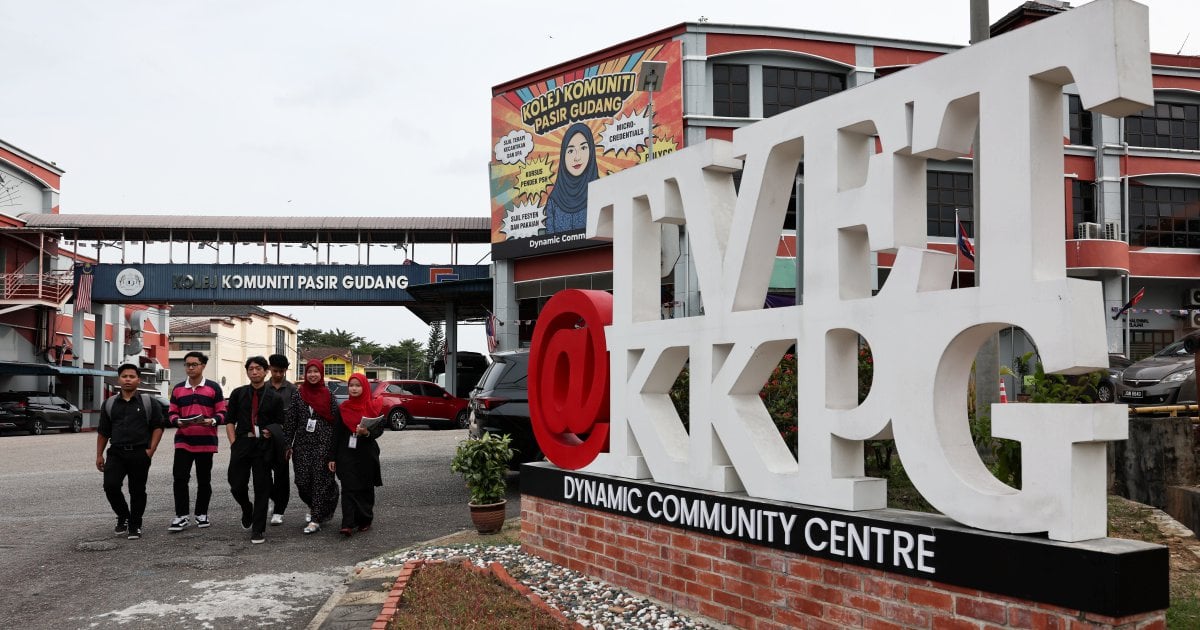
KUALA LUMPUR: The Human Resources Ministry is rolling out three key strategies to strengthen English language proficiency among the country’s workforce, including enhancing the Technical and Vocational Education and Training (TVET) curriculum at its skills training institutions.
Minister Datuk Seri R. Ramanan said the ministry is committed to improving English proficiency in a gradual and inclusive manner, focusing on industry needs while maintaining Bahasa Melayu as the national language.
“English proficiency is a core competency that is increasingly critical, particularly for new entrants to the workforce, who face a global, technology-driven environment shaped by automation and artificial intelligence (AI).
“Strengthening English skills also enhances the employability of TVET graduates.
“Through the enhancement of the TVET training curriculum at skills training institutions under the Skills Development Department, this is implemented via the promotion of bilingual reference materials.
“It also includes work-based training modules, as well as presentations and assessments conducted in English.
“The Labour Department supports this initiative by requiring full-time students to complete general English modules throughout their courses,” he told Dewan Rakyat today.
Ramanan was responding to a question from Datuk Iskandar Dzulkarnain Abdul Khalid (PN-Kuala Kangsar), who asked about the ministry’s readiness to introduce initiatives to strengthen English proficiency across all workforce sectors in Malaysia.
He added that the ministry is also integrating English language elements into the development of the National Occupational Skills Standards (NOSS), particularly for sectors aligned with global industry.
“This includes advanced manufacturing, information and communication technology (ICT), automotive, aerospace, and professional services. Emphasis is placed on the use of technical terminology, understanding work documentation, and effective workplace communication.
“To date, 90 per cent of NOSS has been developed in English by industry panels, except for fields related to Islam, such as tahfiz education and mosque management.”
Ramanan said the ministry also provides an online training platform, e-LATiH, through the Human Resources Development Corporation (HRD Corp), which offers over 2,000 free courses.
“The e-LATiH platform also offers courses in English, professional communication, and workplace skills.
“Through e-LATiH, Malaysians and graduates in both urban and rural areas, including Sabah and Sarawak, have the opportunity to improve their English proficiency flexibly.”
© New Straits Times Press (M) Bhd