
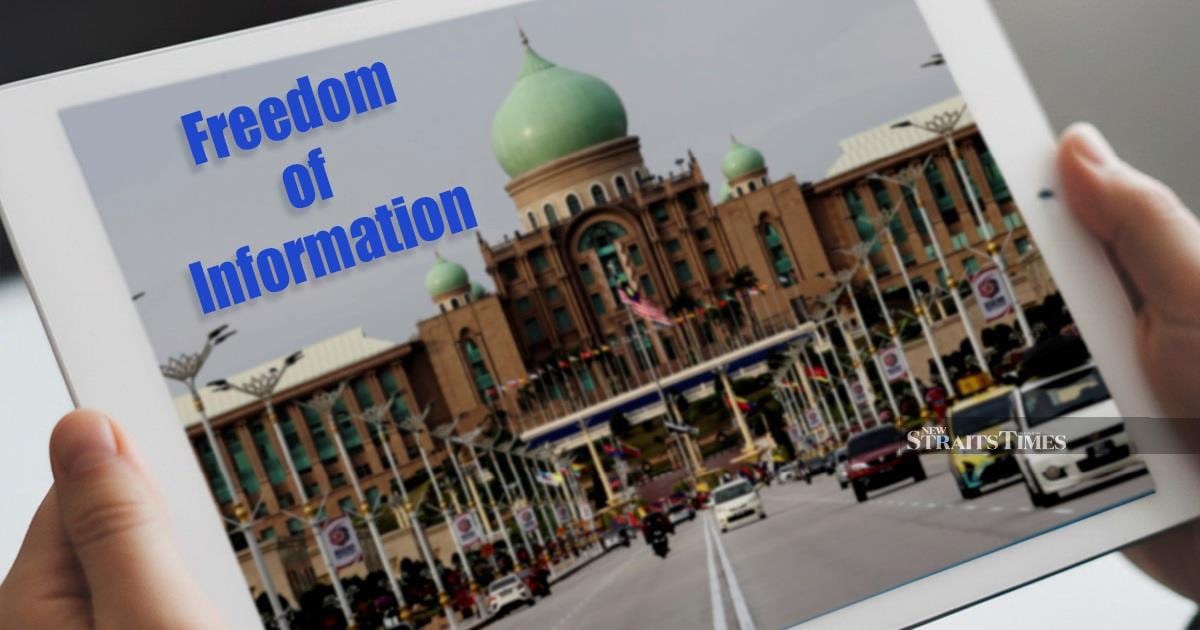
BEFORE we welcome the government’s planned tabling of the bill for the Freedom of Information Act (FOIA), we have to ask: what does it mean and what does it imply? The FOIA charter promises government transparency, accountability and public trust.
To date, only Selangor and Penang have enacted their own freedom of information laws, back when the two state governments were led by the opposition.
However, critics have argued that the laws in these two states have been far from perfect. Having such a law means eradicating the entrenched culture of administrative secrecy, broadly governed by the Official Secrets Act 1972 (OSA).
Now comes news that Prime Minister Datuk Seri Anwar Ibrahim’s administration wants to enact a federal FOIA, potentially his biggest act of reformation. It won’t be easy: it requires a political battle to reform the OSA and a perseverance to transform Malaysia’s infamous bureaucratic culture.
The FOIA, an idea that was floated decades ago, was inspired by its application in most democratic countries, even Asean member nations, which makes Malaysia an outlier. It is a difficult undertaking that no federal government before was willing to do, so Selangor and Penang are “proof of concept”. Expanding it nationally means confronting the concept of state secrecy.
The government can expect pushback because the FOIA applies to all state governments, ministries and government agencies, with clearly-defined disclosures of information.
To temper its implementation, the FOIA needs an independent appeal avenue if there are challenges to denied requests.
Malaysian society and the media will have to be educated on their FOIA rights. Still, the proposed FOIA will complement Malaysia’s big digital transformation push enabling economic and anti-corruption benefits to attract major foreign investments, improve public procurement and align with the National Anti-Corruption Plan.
Of course, the FOIA will be armed with exemptions, like for national security, still a sacrosanct idea but the opaque business of managing local councils and socio-economic agencies is not. Therein lies the rub: the manoeuvres to circumvent and modernise the 55-year-old OSA if not by sheer political will and bureaucratic cultural shift.
Overall, the FOIA is technically and administratively practical, aided by the working models of Selangor and Penang. Nevertheless, their successes are mixed, marked by significant transparency but limited by fundamental legal and jurisdictional constraints.
© New Straits Times Press (M) Bhd