
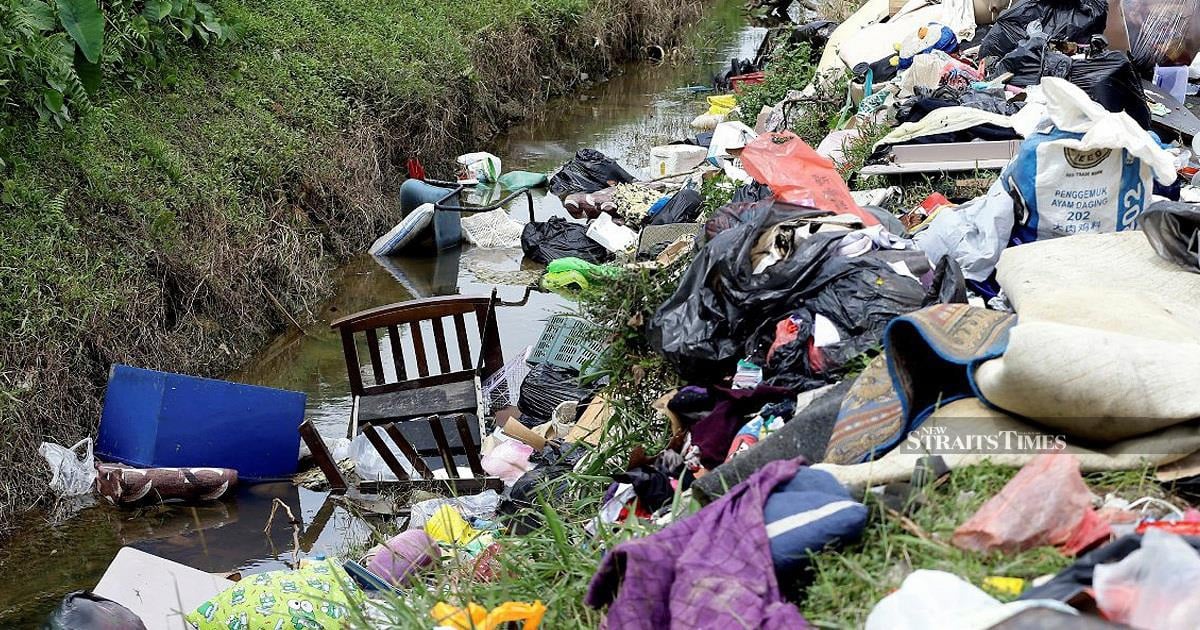
YOU would think that cleaning up Malaysia’s astounding amount of litter, whether on the streets or in our precious waters, and disciplining those with a habit of littering could be done fast.
You think wrong. In fact, cleaning up the problem took 20 years after the Solid Waste and Public Cleansing Management Act 2007 was enforced, first as a 2025 amendment, then full enforcement in the new year. The Solid Waste and Public Cleansing Management (Amendment) Act 2025 aims to improve the original act, not replace it.
It provides new provisions, like community service orders for littering, instead of only fines, to strengthen enforcement and awareness. The wide gap between conception and implementation is a complex transition, primarily due to federal-state jurisdictional issues.
States must “surrender” their executive powers, and even then, Selangor, Penang, Kelantan and Terengganu haven’t given up their jurisdictions. The act overhauls the waste management system, moving from local council collection to federal concessions of 22-year contracts, a move slowed by poor funding to build waste-to-energy plants.
Once the bigger red tape was untangled, the act centralises waste control, establishes licensing for services, mandates the 3R (reduce, reuse, recycle) approach, puts Solid Waste and Public Cleansing Management Corporation (SWCorp) under the supervision of the Housing and Local Government Ministry to enforce the law, grants federal power for enforcement and introduces levies for services. SWCorp will carry out the separation, collection, transport, processing, recycling, treatment and disposal of rubbish and cleaning public roads, drains, beaches and markets, as well as clearing illegally dumped waste.
The need for this law comes from poor civic consciousness and inadequate enforcement that led to the “throwaway culture” and litterbugs’ mindset that they aren’t responsible for clean public spaces.
Is it a wonder that 42 notices of offence were issued on the New Year to 24 Malaysians. Even foreigners have the bad habit: 18 were booked for disposing cigarette butts, water bottles, drink cans, plastic items, tissue paper and food wrappers in public areas and on the streets during enforcement operations.
We should embrace this Singapore-style anti-litter culture: strict laws, heavy fines and punishing offenders to clean public areas. This new law is only the start, so there shouldn’t be any slack leading to complacency.
Beyond the act, awareness is key. Everyone must understand not just the penalties, but also the rationale.
Consistent enforcement, including in states still refusing to adopt the act, is critical.
© New Straits Times Press (M) Bhd