
KUALA LUMPUR: The ringgit’s positive trajectory could continue into 2026, driven by improving domestic fundamentals, supportive capital flows and a weaker US dollar outlook, according to market observers.
Despite global uncertainties, they said strong domestic fundamentals, closer ties with Asia and a supportive US monetary outlook should keep the ringgit on a positive path next year.
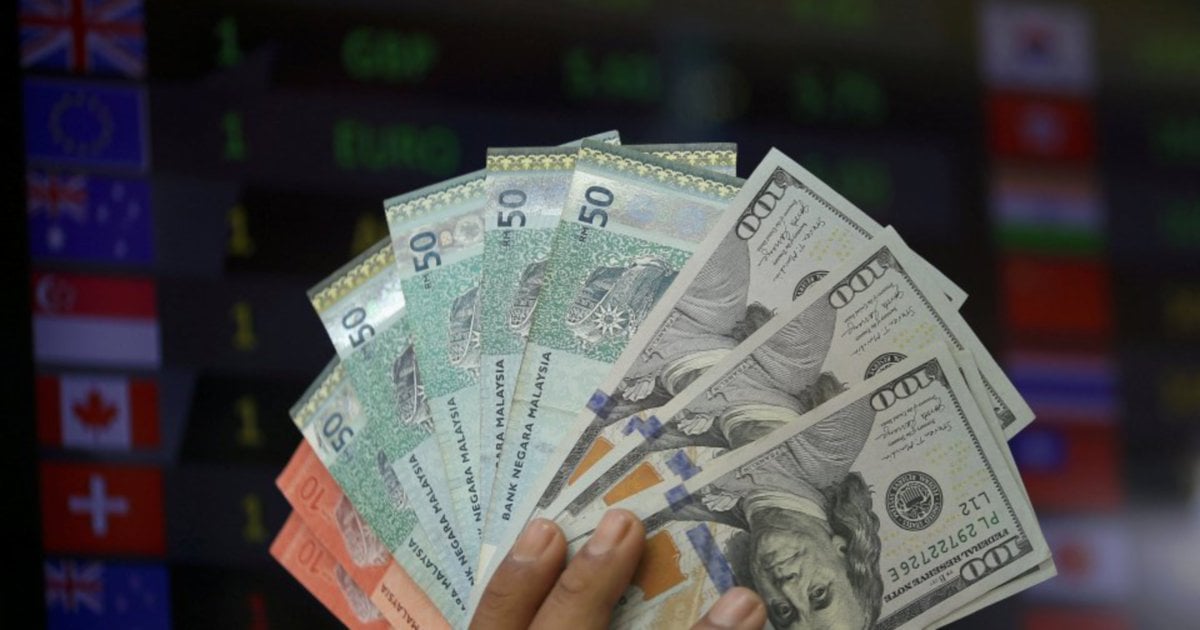
The ringgit climbed to a five-year high against the US dollar at 4.045, up from yesterday’s 4.064, reaching levels not seen since March 3, 2021.
So far, the currency has gained 9.4 per cent against the US dollar and outperformed regional peers such as the Singapore dollar at 3.8 per cent and the Thai baht at 0.05 per cent.
IPPFA Sdn Bhd director of investment strategy and country economist Mohd Sedek Jantan said the ringgit’s 2025 performance has already exceeded IPPFA’s in-house estimate of 4.15 per US dollar, with the 2026 projection currently at 4.05.
He said the target may be revised by the end of March 2026, after the full-year 2025 gross domestic product (GDP) figures are released, the US Federal Reserve (US Fed) meeting takes place and early market movements provide a clearer gauge of economic activity.
Sedek noted that besides the softer US dollar, the ringgit’s appreciation also reflects genuine improvements in Malaysia’s economy and balance of payments.
“The external account has strengthened structurally, with a widening goods surplus, normalising tourism receipts, and stabilising income outflows. At the same time, fiscal signalling has improved significantly, thanks to clearer consolidation pathways and more credible medium-term revenue reforms.
“This combination has lowered Malaysia’s external financing risk premium, which is why the ringgit has been able to rally even without aggressive domestic rate hikes,” he added.
However, Sedek cautioned that the gains remain vulnerable to external shocks, noting that the main near-term threat is not a rebound in the US dollar but a broader repricing of global risk.
“A spike in US Treasury yields, a correction in global equities, or a shock in credit markets could put emerging market currencies under pressure. Commodity volatility, particularly in energy and palm oil, and shifts in global capital flows are additional risks,” he said.
Sedek noted that on the domestic and regional front, policy credibility remains a key anchor for the ringgit.
“Markets are increasingly pricing Malaysia as a country with improving fiscal discipline, stable monetary policy and clearer medium-term reform intent.
“Bank Negara’s decision to keep the overnight policy rate steady at 2.75 per cent while inflation remains contained reinforces monetary predictability,” he said.
Sedek also noted that fiscal measures such as digital taxation, carbon pricing and a modernised consumption tax framework are crucial for sustaining investor confidence without resorting to growth-dampening austerity.
Regionally, he said the ringgit’s performance is closely tied to Asia’s capital flow cycle.
“If China‘s stabilisation continues and ASEAN trade remains resilient, regional risk appetite will support currencies like the ringgit. Normalisation of Japanese policy also tends to benefit fundamentally strong Asian currencies, including the ringgit,” he said.
Sedek added that with nearly 70 per cent of Malaysia’s trade anchored within Asia, the ringgit is less exposed to US demand shocks than many peers.
He said that if regional supply chains, electronics exports and intra-Asian investment flows remain firm, the ringgit can sustain levels around 4.05.
“The currency is no longer being driven purely by the dollar cycle but by Malaysia’s reintegration into a more Asia-centred growth and capital flow system,” he said.
Supporting the ringgit outlook, Public Investment Bank Bhd (PublicInvest) head of research Eltricia Foong said the US Fed is expected to maintain accommodative policy in 2026, including interest rate cuts and renewed quantitative easing, which could further weaken the greenback against the ringgit.
“While we forecast the ringgit to strengthen to RM4.00–4.05, there is upside risk of it rising below RM4.00 to the US dollar towards the second half of 2026.
“This could benefit raw material importers such as consumer players, lowering their translated cost of goods and boosting profit margins,” she said.
Kenanga Research said its end-2025 projection of 4.08 remains intact, while the end-2026 target of 3.95 reflects a constructive medium-term outlook.
The firm said the ringgit’s firm profile is supported by sustained foreign inflows into Malaysian bonds and exporters’ repatriation, with foreign currency deposits providing an additional layer of support.
Kenanga Research noted that a 10 per cent reduction in these deposits could lift the ringgit by roughly 3.0 per cent against the US dollar.
“The ringgit continues to benefit from Malaysia’s stable macro backdrop, ongoing structural reforms and selective investor flows as global uncertainty lifts US Treasury term premia.
“While the real yield differential versus the US remains modest, Malaysia offers one of the most attractive risk-adjusted carry profiles in emerging Asia,” it said.
© New Straits Times Press (M) Bhd