
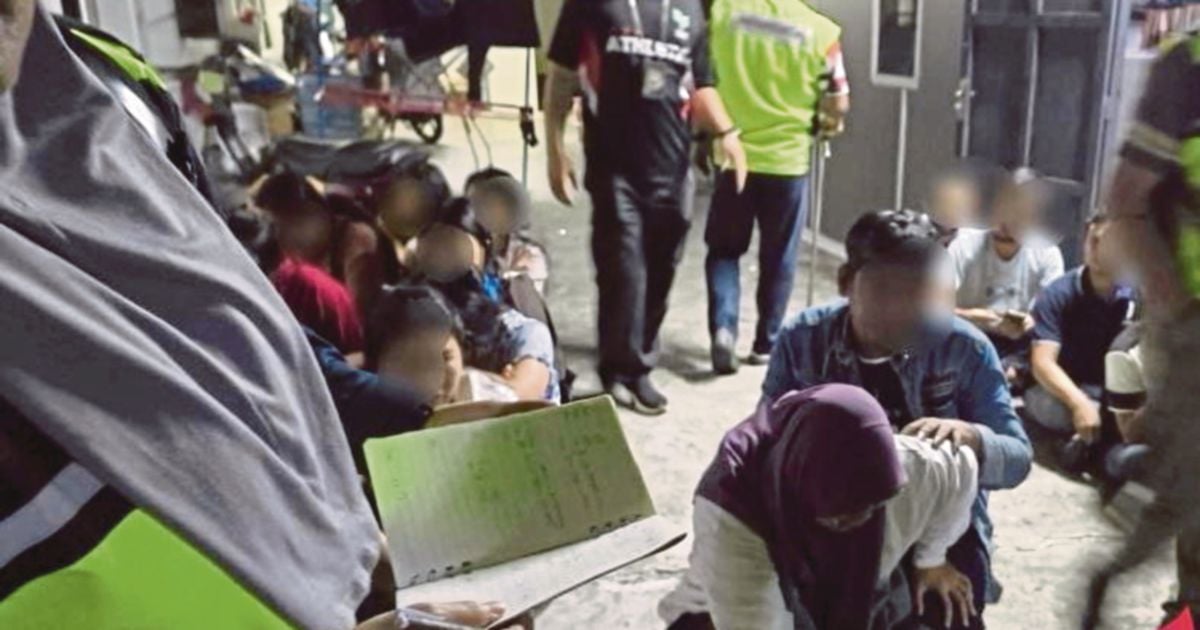
JOHOR BARU: There is a troubling rise in the number of human trafficking routes, irregular migration and border-linked scams affecting Indonesia and Malaysia, a top diplomat in the southern region said.
Indonesian consul-general in Johor Baru Sigit S. Widiyanto said non-procedural or undocumented workers remained his office’s biggest headache.
He said many Indonesians overstayed social visit passes or were lured by agents into entering through illegal sea corridors flanking Johor and the Riau Islands.
The consulate facilitated the repatriation of 5,620 Indonesians this year, up from 5,286 last year.
Emerging trafficking patterns include job-seekers routed through third countries such as Thailand, syndicates exploiting backdoor sea channels and networks smuggling labour and contraband, including tin ore and narcotics, across the Strait of Malacca.
Sigit said human trafficking syndicates were believed to be operating along long-established cross-border routes originating from Indonesian regions directly bordering Malaysia, particularly Dumai, Bengkalis and Selat Panjang in Riau, and Batam, Bintan and Karimun in Riau Islands.
[[nid:1340346]]
Their proximity to Johor and long maritime links make these areas vulnerable to organised transnational crime.
Information showed syndicates using multiple smuggling routes.
Sigit said investigations also revealed consistent patterns, with recruitment via social media targeting domestic workers and ship crew
Many Indonesian migrant workers were exploited, including being employed without pay and subjected to physical and psychological abuse.
Victims were frequently sent to remote locations with offers of unusually high salaries.
Sigit said syndicates were aided by corrupt officials who allowed Indonesian migrant workers and citizens without valid permits to cross borders.
MALAYSIA’S REPATRIATION PUSH GAINS TRACTION
Sigit said programmes targeting undocumented workers, the Migrant Repatriation Programme 2.0 and the M programme under the Immigration Department, had enabled thousands of Indonesians to return without facing prosecution.
The M programme is a joint initiative between Malaysia and Indonesian missions to repatriate undocumented Indonesian nationals.
Since its launch in 2024, the programme has helped 1,706 detainees return.
It will run for two years, with a target of repatriating 7,200 Indonesians.
“It is a joint responsibility. Malaysia eases repatriation and Indonesia ensures safe reintegration,” said Sigit.
He said over 138,000 Indonesians live in southern Malaysian states, though the actual figure was likely much higher due to undocumented movement.
To counter misinformation and scams, the consulate runs podcasts on TikTok, radio broadcast programmes, digital advisories and leaflets explaining common frauds.
Sigit acknowledged a rise in cross-border scams, smuggling and organised crime between Johor and the Riau Islands, but said Malaysian police collaboration with Indonesian’s National Police is now more structured.
Multiple memoranda of understanding, from 2005 to the most recent signed in Labuan Bajo in 2023, allowed for joint investigations, intelligence-sharing and border patrols.
He said the consulate coordinates with Malaysian authorities to ensure its citizens’ rights are respected.
This year, both nations held multiple bilateral and Asean-level security forums, from the Senior Officials Meeting on Transnational Crime (SOMTC) in Putrajaya to the Asean Chiefs of Police (Aseanpol) meeting in Bangkok.
“Crime syndicates don’t respect borders. Our cooperation must always outrun their creativity,” added Sigit.
SOMTC is a high-level body of senior Asean officials that coordinates policies and strategies to combat transnational crimes, including terrorism, human trafficking, cybercrime and drug trafficking.
Aseanpol, also known as the Southeast Asian Police Organisation or Asean Nations Police, facilitates cooperation among the bloc’s police forces to tackle cross-border crimes and boost regional law enforcement.
NUMBER OF WAGE ABUSE CASES FALL SHARPLY
Sigit also reported a sharp drop in labour disputes involving Indonesian workers.
He said wage-related complaints dropped from 57 cases in 2024 to 25 up to November this year, with unpaid wages dropping by nearly RM432,000.
He attributed this to the KSATRIA hotline and stepped-up outreach, from radio broadcasts to direct engagements in worker-dense clusters.
The KSATRIA WhatsApp service, run 24/7 by the Indonesian consulate-general in Johor Baru, offers swift aid and protection to Indonesians, particularly migrant workers and Malaysians in emergencies involving Indonesian nationals, including accidents, legal cases and deaths.
The steps were taken to encourage Indonesian workers to report abuse earlier and more safely.
“Protection is only real when access to help is easy,” Sigit said, adding that closer cooperation with Malaysian authorities significantly reduced exploitation trends.
© New Straits Times Press (M) Bhd