
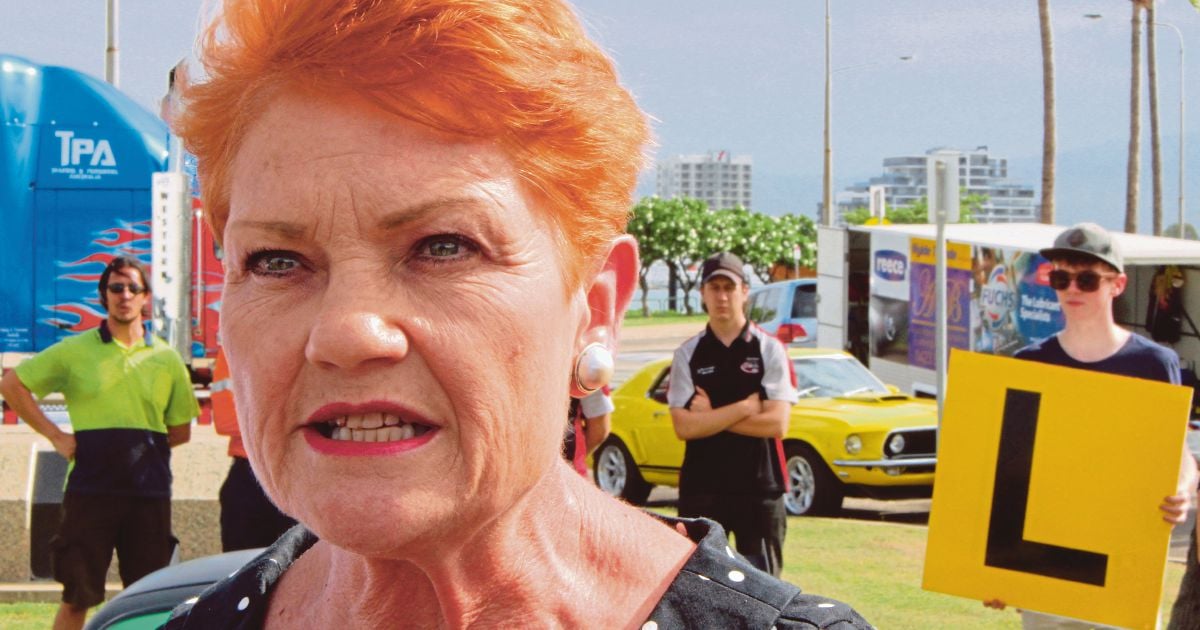
AUSTRALIA’S flame-haired populist Senator Pauline Hanson and her anti-immigration party have rocketed up opinion polls, nearing a peak seen three decades ago when she first entered politics and pushed conservative parties to harden border policies.
The resurgence of Hanson’s One Nation coincides with United States President Donald Trump‘s tougher message on migration, which has included the US embassy in Australia being instructed to collect migrantlinked crime data as Washington urged US diplomats to lobby against mass migration.
Yet Hanson’s revival as a political force is likely more driven by local factors including cost-ofliving pressures, housing shortages and historically high migration which have driven voter dissatisfaction, analysts and party officials say.
Prime Minister Anthony Albane s e’s centre-left Labor Party won national elections decisively in May, and remains ahead in polling.
The conservative opposition Liberal Party, which lost its leader and a swathe of seats at the May election, is at a historic low — another factor encouraging right-wing voters to look to One Nation, analysts said.
“One would argue that Pauline was the original Trump,” Jame s Ashby, Hanson’s chief of staff, said in an interview. “Other politicians and the public have caught up with where her mindset was at.
“We are being swamped by mass migration in this country.” Hanson, 71, made global headlines striding through the Australian Parliament in a burka last month, and was barred from the chamber for seven days.
One Nation holds just four seats in Parliament ‘s 76-seat upper house, but recent polls indicate it could win more at the next election due by 2028.
A Roy Morgan survey of 5,248 people in November showed support for One Nation at 14 per cent nationally, the highest since 1998.
Three analysts, including a Liberal Party official, said One Nation’s polling is putting pressure on the opposition Liberal-National coalition. The Liberals will announce a revised policy to “slow ” migration before Christmas, party officials said.
One Nation could gain an influential position in the next Parliament’s upper house, benefiting from Australia’s preferential voting system, said pollster Gary Morgan, executive chairman of Roy Morgan.
“Her vote will be up, no question it will be up, unless a strong leader comes into the Liberal Party,” he said.
Unlike Nigel Farage’s Reform in Britain, One Nation will not become a contender for government, because it is unlikely to win lower house seats, he added.
Minor parties and independents took a third of the vote at the 2025 election, continuing a trend which has seen Australia’s traditional two-party system ero ding.
But they were mostly independent moderates who champion action on climate change winning formerly Liberal-held city seats, and such voters aren’t swayed by Hanson, said Morgan.
One Nation’s goal at the next election is to win lower house seats, Ashby said. He devised the party’s strategy to bypass traditional media, directly appealing to voters on social media with a satirical animation series that lampoons myriad “woke” issues.
“We need to reach voters of all ages, not just with policy, but we also need to reach them with the general understanding of the pain and the hurt they are going through,” he said.
The party spent around A$300,000 for 100 episodes of the satire featuring Hanson, which he says has drawn 50 million views.
A study released last week showed concern over immigration at the 2025 election doubled to six per cent, the highest on record, attributed to “the postpandemic influx of immigrants and the resulting pressure on housing and infrastructure”.
Arthur Sinodinos was chief of staff to Liberal prime minis ter John Howard when One Nation first burst into politics in 1997. He said a revised Liberal immigration policy could neutralise Hans on’s resurgence, as it did previously.
At the 2001 election, Howard won a come-from-behind victory by adopting a tough border policy after polls highlighted voter concerns over asylum seekers arriving by boat.
However, Sinodinos said immigration levels need to be set with an eye on the economy, and not as a “silver bullet for housing” and cautioned migrant voters would “react negatively if they perceive scapegoating of immigrants for society’s ills”.
The writer is from Reuters
© New Straits Times Press (M) Bhd