
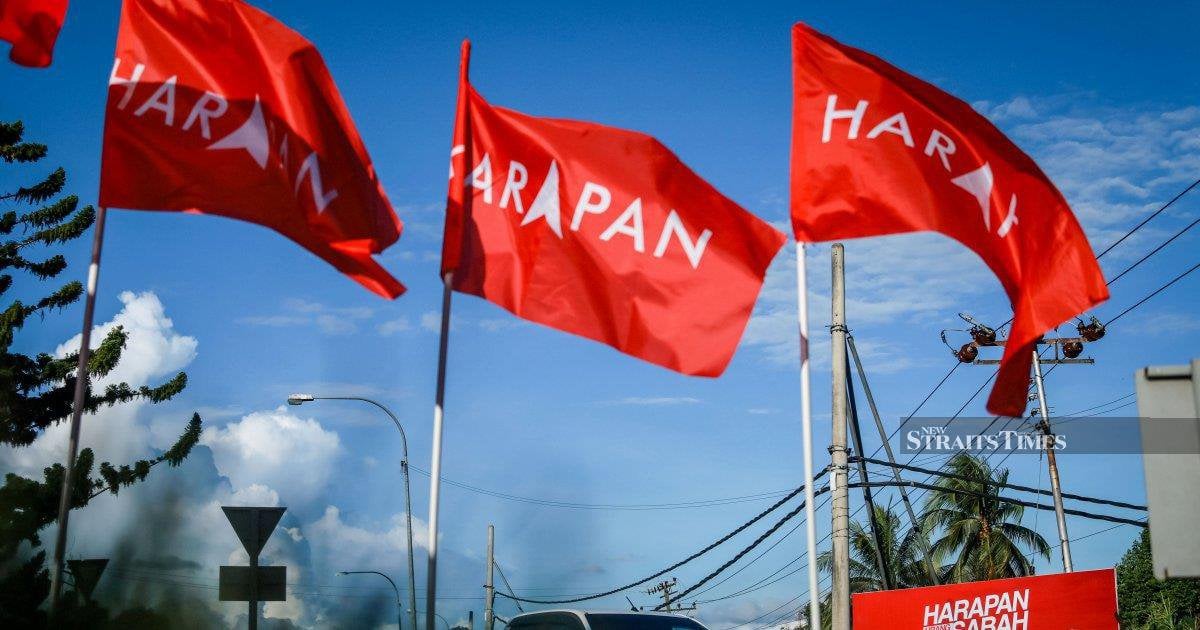
KUALA LUMPUR: Analysts attribute Pakatan Harapan’s (PH) poor showing in the 17th Sabah state election, where it secured just one seat, to voter dissatisfaction with the coalition.
International Islamic University Malaysia political scientist Associate Professor Dr Syaza Shukri said PH’s losses – including the complete wipe-out of DAP – reflected public “unhappiness” with the coalition’s perceived lack of progress rather than a simple shift towards local parties.
She said that DAP votes largely swung to Parti Warisan, seen as more vocal on Sabah-specific issues.
“There is a sense that PH is not doing enough, particularly in fulfilling its reformist promises. Urban Chinese voters are more likely to punish PH, especially in light of corruption scandals since last year and just weeks before the election. The shift to Warisan is largely a reflection of this dissatisfaction, with Warisan positioning itself as an opposition that challenges PH–Gabungan Rakyat Sabah (GRS) scandals while appearing to prioritise the people,” she told the New Straits Times.
Universiti Malaysia Sabah analyst Associate Professor Dr Lee Kuok Tiung said that controversies surrounding Sabah’s 40 per cent revenue entitlement also influenced voter sentiment.
He said the federal government’s decision to appeal the judgement on Sabah’s special revenue entitlement was seen by ordinary voters as an attempt to mislead the state’s population.
“When promises are made during campaigns regarding the 40 per cent entitlement, it is certainly appealing. But the critical question remains how this will be realised, and whether the state government can immediately secure the funds,” he said.
Lee added that Chinese voters appeared to vote as a bloc, similar to previous shifts from MCA to DAP, but cautioned that this trend should be considered in context, as GRS did not contest urban constituencies.
Allegations linking GRS to corruption scandals had also eroded its support, he said.
PH fielded 22 candidates in Sabah but only secured a single victory in Melalap, where Datuk Jamawi Jaafar – who defected from Parti Gagasan Rakyat Sabah shortly before being named a PKR candidate – won.
DAP, which previously held eight seats following the 2020 state election, was entirely wiped out, while Amanah also failed to secure any seats. In contrast, Pas made history by winning its first seat in Sabah, capturing Karambunai.
GRS won 29 of the 55 seats it contested, with Parti Warisan taking 25 and Barisan Nasional six.
Independent candidates won five seats, United Progressive Kinabalu Organisation (Upko) three, and Parti Solidariti Tanah Airku (Star) two, while Perikatan Nasional (PN) and Parti Kesejahteraan Demokratik Masyarakat (KDM) claimed one seat each.
A total of 1,148,476 voters cast their ballots, representing a 64.35 per cent turnout.
© New Straits Times Press (M) Bhd