
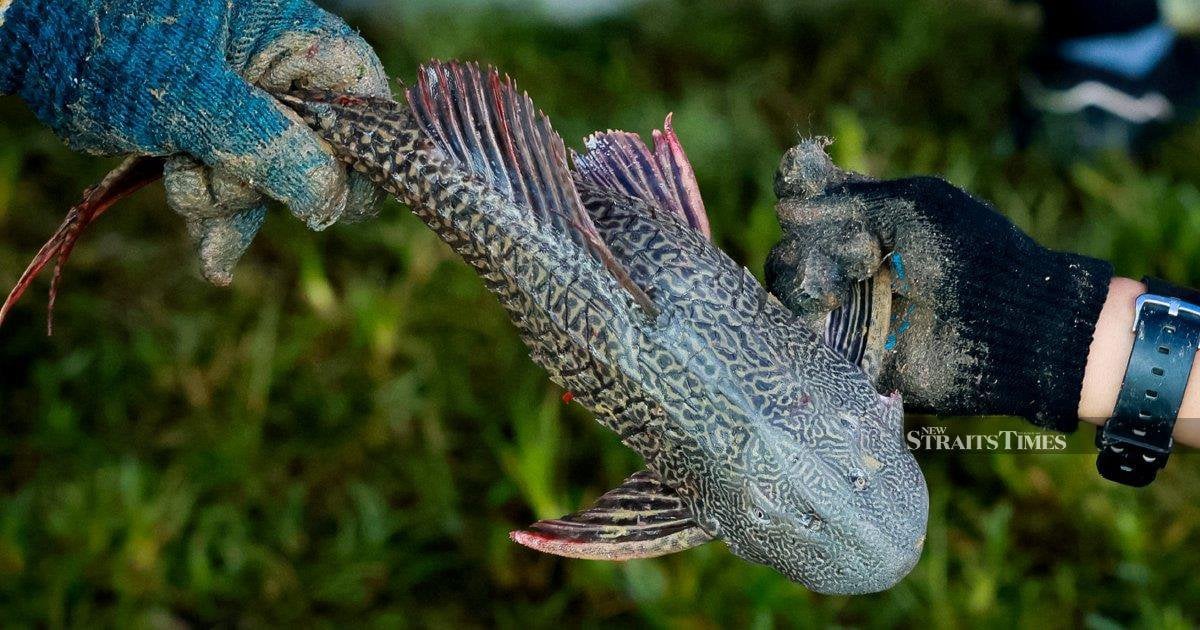
KUALA LUMPUR: Cooperation between the government, non-governmental organisations (NGOs) and local communities can help curb the spread of invasive foreign fish species, including making use of catches such as the ”ikan bandaraya” (suckermouth catfish) for fertiliser or feed for other fish, the Dewan Rakyat was told today.
Agriculture and Food Security Minister Datuk Seri Mohamad Sabu said such joint initiatives are being carried out in rivers where invasive species dominate, including Sungai Klang and several other locations affected by the influx of foreign fish.
“NGOs have been working with assistance from the ministry to catch these foreign fish.
“Some have tried producing fertiliser and so on.
“Although we have not issued any special certification yet, their private initiatives – if they can be used as fish feed or fertiliser – are very much welcomed.
“As for monitoring using drones and the like, this will be monitored and pursued.
“The government views this matter seriously because it (proliferation of invasive fish) can reduce the activities of those who earn a living from the rivers,” he said in reply to a question from Datuk Adnan Abu Hassan (BN-Kuala Pilah).
Mohamad said the dominance of ikan bandaraya in rivers, especially near urban areas, also affects biodiversity sustainability and the activities of communities that depend on river resources.
“I often cast nets in rivers near KLIA.
“I throw the net several times, and it’s always ikan bandaraya that get caught. Other fish have almost disappeared,” he said, adding that control efforts are being carried out continuously.
Responding to the original question from Datuk Dr Alias Razak (PN-Kuala Nerus) on the effectiveness of measures to control invasive fish breeding, Mohamad said ongoing containment efforts have contributed to an increase in national inland fisheries landings.
He said that in 2024, the inland fisheries sector recorded landings of 9,653 metric tons worth RM191 million compared with 9,434 metric tons in 2023, representing an increase of 219 metric tons or 2.3 per cent from the previous year.
“The Agriculture and Food Security Ministry, through the Department of Fisheries Malaysia, has conducted 31 series of culling programmes since 2022, successfully removing 8.8 metric tons of foreign fish with the cooperation of NGOs and local communities.
“From a legal standpoint, the department together with state governments is updating the Fisheries (Riverine) Rules to include a ban on releasing foreign fish, with fines of up to RM20,000,” he said.
In response to another question, Mohamad said that to protect endangered marine species such as dugongs, the government is drafting fisheries regulations under Section 45 of the Fisheries Act 1985 to detail management procedures for controlling tourism activities and designating restricted zones to prevent conflicts in the use of areas.
He said the gazettement is expected to increase the size of protected waters by 1,508sqkm, or about 0.28 per cent of national waters, and so far three engagement sessions have been held from 2023 to 2024 with fishing communities.
“The Department of Fisheries Malaysia has carried out periodic monitoring and joint enforcement patrols with the Malaysian Maritime Enforcement Agency and the Marine Department, controlling tourism activities and boat movement in dugong habitats.
“In addition, marker buoys have been installed around dugong habitat zones to alert tourism operators and local communities, along with public awareness programmes and training for fisherfolk and local tourism operators to foster understanding of the importance of protecting dugongs,” he said in reply to a supplementary question from Muhammad Islahuddin Abas (PN-Mersing).
– Bernama
© New Straits Times Press (M) Bhd