
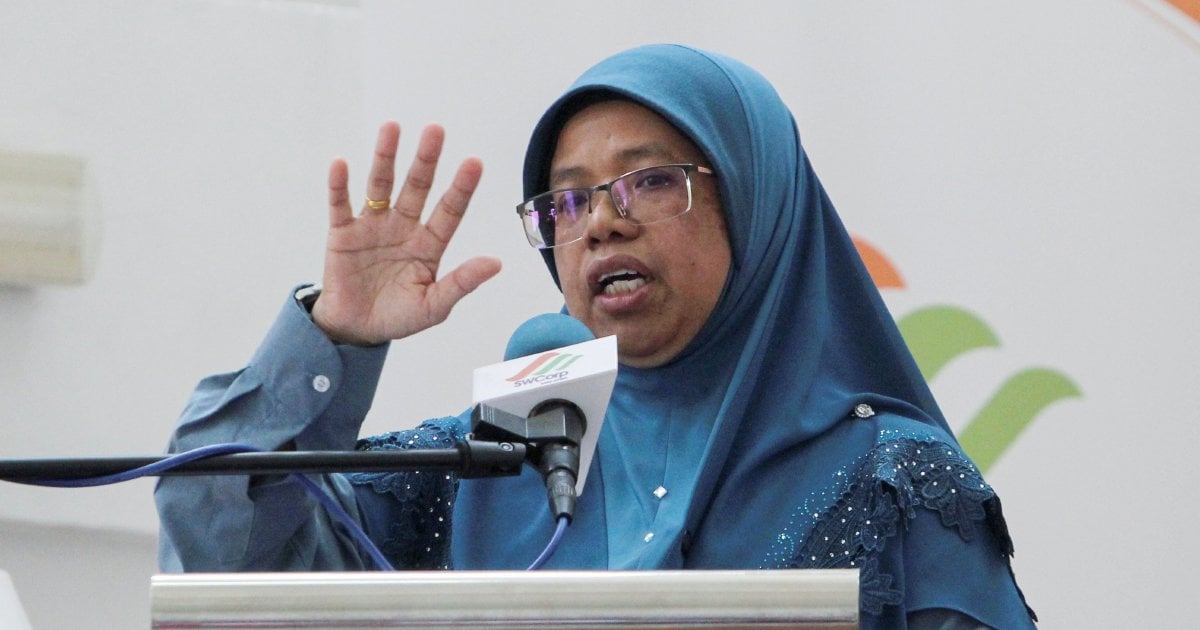
KUALA LUMPUR: The Housing and Local Government Ministry (KPKT) has emphasised that blacklisting developers and company directors responsible for abandoned housing projects continues to be a strict government measure to safeguard homebuyers.
Its deputy minister Datuk Aiman Athirah Sabu said under the Housing Development (Control and Licensing) Act 1966, a project may be declared abandoned if it is not completed within the timeframe stipulated in the sale and purchase agreement and shows no significant activity at the construction site for more than six months.
“Once a project is declared abandoned, the ministry will blacklist the developer and its board members. They will be barred from applying for new housing development licences, and their Housing Development Account (HDA) will be frozen,” she said during the committee-stage winding-up of the Supply Bill 2026 in the Dewan Rakyat today.
Aiman Athirah said that a comprehensive review of the Act was underway to strengthen governance and ensure more efficient management of housing projects, thereby safeguarding homebuyers’ rights and interests.
“At the same time, the ministry allows developers to offer incentives to attract buyers to their projects. However, they remain bound by the law. Misleading statements, false representations, or inaccurate claims constitute offences and may result in compound penalties,” she said.
She stressed that all project specifications must be clearly detailed in the Sale and Purchase Agreement (SPA) to ensure buyers fully understand the property features offered.
“If there is any non-compliance, buyers may take the matter to court or the Homebuyers’ Claims Tribunal. The defect liability period (DLP) after handover is 24 months, during which developers must rectify any defects or work not meeting SPA specifications. If disputes arise, including failure by the developer to comply with SPA terms, buyers may file a case with the tribunal,” she said.
Aiman Athirah also highlighted efforts to strengthen the rent-to-own (RTO) scheme under the People’s Housing Programme (PPR) and Residensi Rakyat Programme (PRR), currently implemented in Kedah, Kelantan, Penang, Negri Sembilan, Selangor, Terengganu, and the Federal Territories.
“The ministry is collaborating with state governments, financial institutions, and industry stakeholders to enhance the existing RTO scheme. We are exploring alternative financing models and potential expansion to ensure more Malaysians have access to quality, affordable housing,” she said.
She added that the government continued to encourage developers to adopt the 10:90 build-then-sell (BTS) model, where buyers pay 10 per cent upfront and the remaining 90 per cent only upon completion and issuance of the Certificate of Completion and Compliance (CCC).
“Although this model is allowed under current legislation, only financially strong developers can implement it voluntarily. A risk-sharing framework involving banks, developers, and the government is being studied to ensure the BTS model can be applied sustainably, particularly for affordable housing,” she said.
© New Straits Times Press (M) Bhd